
MARTÎM
MARTÎM develops his practice in a territory between painting and ceramics, exploring the body, identity, and memory. Drawing from landscape and, in particular, the element of water, he creates a new dialogue between the natural and the urban, characterized by a certain strangeness, humor, and a critical investigation of Madeira’s insular heritage.
*
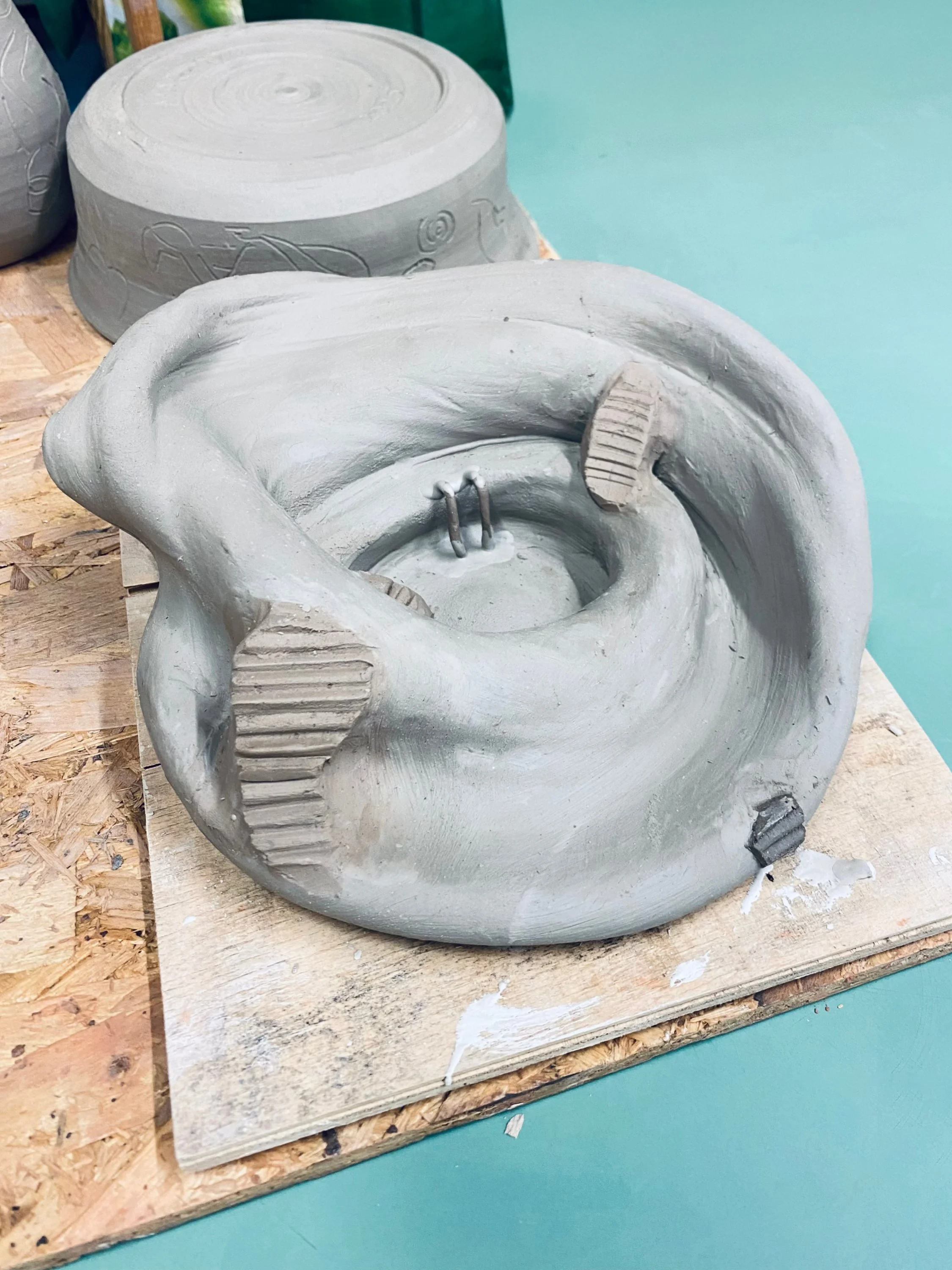
How would you describe your practice? My practice develops through painting and ceramics, where I explore themes related to the body, identity, and memory, often starting from the device of landscape and the element of water. It is within this landscape that I try to counterpose the natural with the urban, such as the relationship between a swimming pool and the open sea that surrounds it, sometimes empty, sometimes full, which, beyond the possibility of a narrative or the evocation of a memory, creates a sense of strangeness that I seek: an inviting utopian place. In these images there is a desire for the manifestation of a sexual impulse linked to my memories of childhood and adolescence on the north coast of the island of Madeira, and to an understanding of insular heritage. This exploration became more urgent as I investigated the history of the island’s colonization, the monoculture of sugarcane, and the use of enslaved labor. The iconography of the “sugarloaf” became a personal obsession, from its form to its function, from its innocent and sweet appearance to the history of suffering that remains unknown. Ceramics has served as a means to narrate these different stories.
How do you define your work process? My artistic work is grounded in a personal archive of material and immaterial objects, through which I try to collect images that carry a personal tension. The choice to “attack” a particular image comes from an intuitive process that may be conditioned by my emotional state and by visual stimuli that act as a kind of compulsive agitation, leading me to materialize, transform, or improvise upon that initial image. I play a Reiki album to activate the best possible intuitive version of myself, and, with a very reduced color palette, I begin by simplifying the composition, allowing myself to be carried by the process and responding to the demands that the new image itself requires, until I feel a certain pleasure and autonomy within it. In ceramics, however, the process is different. It starts from a pre-drawn image: I almost project an objective, a final appearance, but the process of getting there ends up being the most challenging and satisfying part, as I learn and consolidate knowledge along the way. Then there is all the magic of touch, of firings, and of glazes.
How does narrative emerge in your work? Narrative enters my work in a natural way: I am still not sure whether my background in theatre has much to do with it. There are recurring elements that point to a personal visual narrative, in which color plays a fundamental role. The challenge is always how to “narrate” without being illustrative or closing off the narrative. Recently, I have been using humor, both in the figures of the sugarloaves and in the more recent series of “helmets/astronauts.” I am trying to bring everything together in future ceramic sugarloaves. Even so, it is always necessary that there be an interest on the part of the viewer to create meaning and to enter the narrative of the work, in a relationship of alterity and playfulness.
To what extent do “error” or chance play a part in your practice? I am impulsive and react to the images that emerge. At times, even with a structured idea and composition, I am unable to carry it out in a rational and technical way. Many of my “skies” are layers of unconvincing attempts and multiple glazes. These “failures,” with a bit of persistence, turn into surprises. I believe in the power of process, in not giving up too quickly. The Astronauts series itself emerged from a free use of leftover paint, and later seeing in that improvised composition almost human forms that narrated a situation. In ceramics, I accept mistakes as provocations for creating new pieces. Since the focus is not on making utilitarian objects, I can experiment more freely, although the variable of time is different.
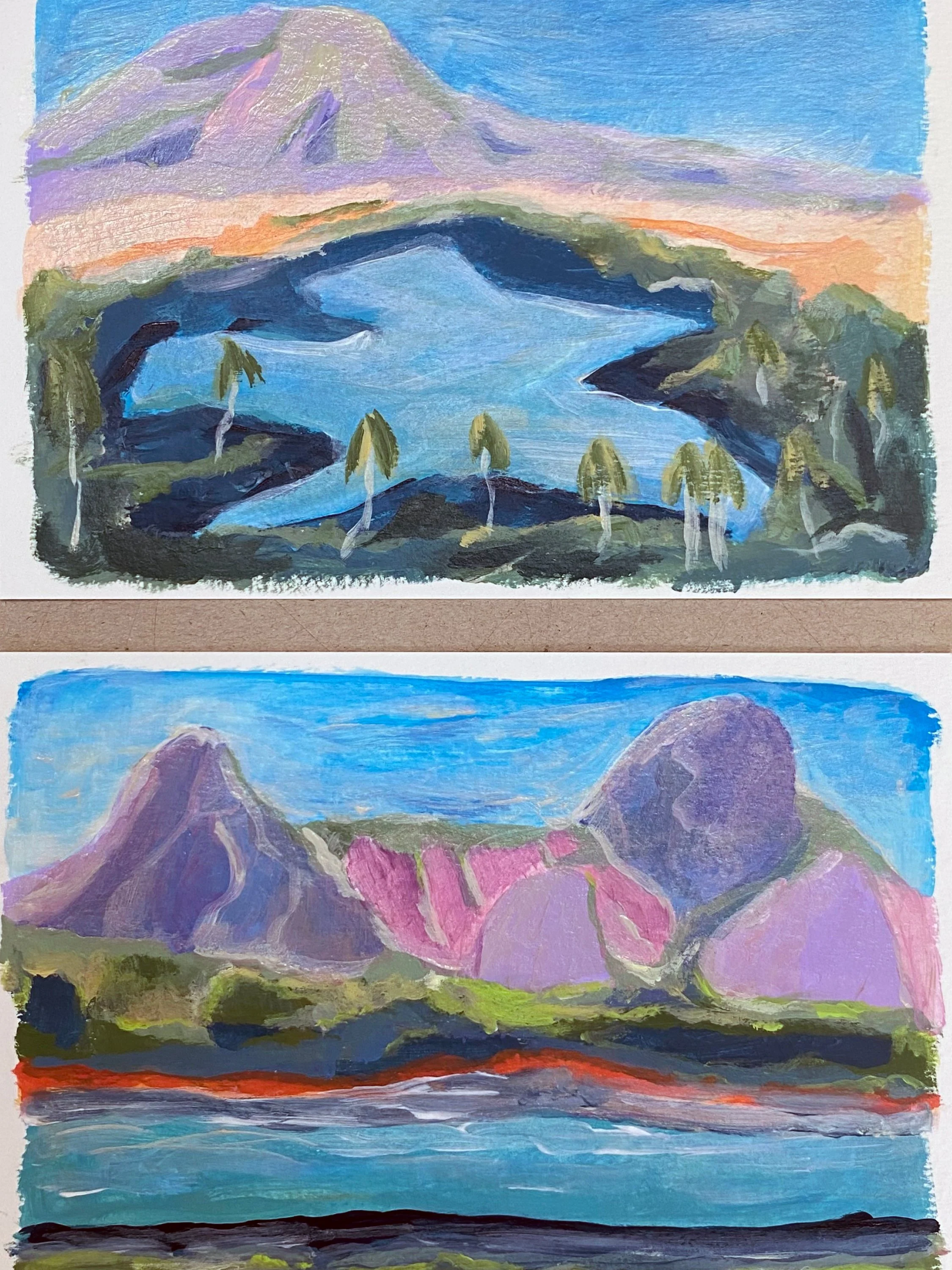
MARTÎM desenvolve a sua prática num território entre a pintura e a cerâmica, explorando o corpo, a identidade e a memória. A partir da paisagem e, em particular, do elemento da água, cria um novo diálogo entre o natural e o urbano, caracterizado por uma certa estranheza, humor e uma investigação crítica da herança insular da Madeira.
*
Como descreverias a tua prática? A minha prática desenvolve-se pela pintura e pela cerâmica, onde exploro temas ligados ao corpo, à identidade, à memória, muitas vezes a partir do dispositivo da paisagem e do elemento da água. É nessa paisagem que tento contrapor o natural com o urbano, como a relação de uma piscina com o mar aberto que a cerca, ora vazia ou cheia, que, além da possibilidade de uma narrativa ou evocação de uma memória, cria uma estranheza que procuro, um lugar utópico convidativo. Nessas imagens há uma vontade de uma manifestação de um impulso sexual ligado às minhas memórias de infância e adolescência na costa norte da ilha da Madeira e entender a herança insular. Essa exploração ficou mais urgente ao investigar a história da colonização da ilha, a monocultura da cana-de-açúcar, e o uso de mão de obra escrava. A iconografia do “Pão de açúcar” passou a uma obsessão pessoal, desde a forma à sua função, desde o seu aspeto cândido e doce à história de sofrimento que ninguém conhece. A cerâmica tem servido para narrar essas diferentes narrativas.
Como caracterizas o teu processo de trabalho? O meu trabalho plástico parte de um arquivo pessoal de objetos materiais e imateriais, onde tento colecionar imagens detentoras de uma tensão pessoal. A escolha de “atacar” uma determinada imagem passa por um processo intuitivo que pode estar condicionado ao meu estado emocional e a estímulos visuais que funcionam como uma agitação compulsiva que me leva a materializar/ transformar/ improvisar essa imagem inicial. Coloco um álbum de Reiki para acionar a minha melhor versão possível intuitiva e com uma paleta cromática bastante reduzida no início começo por simplificar a composição, deixando-me levar pelo processo, respondendo às exigências que a própria nova imagem exige até sentir um certo prazer e autonomia nela.Já na cerâmica, o processo é diferente. Parte de uma imagem pré desenhada: quase que projeto um objetivo, um aspeto final, mas o processo até chegar lá acaba por ser o mais desafiante e satisfatório, pois vou aprendendo e consolidando saberes. Depois há toda a magia do toque, das queimas e vidrados.
De que forma surge a narrativa no teu trabalho? A narrativa entra de forma natural - ainda não consigo perceber se o meu percurso pelo teatro tenha muito que ver. Há elementos recorrentes que apontam para uma narrativa visual pessoal, em que a cor exerce um papel fundamental. O desafio é sempre como “narrar” sem ser ilustrativo ou sem fechar a narrativa. Recentemente, tenho usado o humor, tanto nas figuras dos Pães de açúcar como na mais recente série dos “capacetes/ astronautas”. Ando a tentar juntar tudo em futuros pães de açúcar em cerâmica. Ainda assim, é sempre preciso que haja um interesse de quem vê para significar e entrar na narrativa da obra, numa relação de alteridade e playfulness.
Até que ponto o “erro” ou o acaso fazem parte da tua prática? Sou impulsivo e reajo às imagens que vão surgindo. Por vezes, mesmo com uma ideia e composição estruturada, não consigo cumprir a ideia de forma racional e técnica. Muitos dos meus “céus” são sobreposições de tentativas pouco convincentes e muitas velaturas. Esses “falhanços”, com um pouco de persistência transformam-se em surpresas. Acredito nesse poder do processo, de não desistir logo. A própria série dos Astronautas surgiu de um aproveitamento livre de tinta, e ver depois nessa composição improvisada formas quase humanas que narravam uma situação. Na cerâmica aceito os erros como provocações para criar novas peças. Como o foco não está em criar peças utilitárias posso experimentar mais, embora a variável do tempo seja diferente.
