
DIDIRELLA
DIDIRELLA creates work from what is vulnerable, intimate, and dangerous. Across opera, performance, film, and installation, she transforms real archives, inheritances, and lived experience into devices of pleasure, emotion, and encounter. Her practice inhabits the in-between: between genders, disciplines, and definitions. Rejecting didacticism and moralism, she pursues an art that is raw, sensual, and contradictory, where fragility becomes a collective force.
*
How would you describe your practice? A practice that begins with the body. An androgynous gestation of a futuristic sex symbol living between places, between definitions, between genders. Lygia Clark has this brilliant idea: the house is the body. I like to imagine that if Art were a house, my practice would occupy the strip of sunlight slipping through the crack between two wooden floorboards. I am only a little beam of sunlight. It emerges precisely from the vulnerability of the situations I place myself in. Something the universe or someone has given me, rather than something I deliberately sought. My uncle left me a collection of inherited objects. Someone once called me Shakespeare's Cleopatra. In Poland, someone else called me Wilde's Salome. Without fully understanding why, I begin to search, to investigate, until I find something. I would describe it as an operatic practice, in the sense that it brings disciplines into convergence while remaining free in its mode of reception. It is not multidisciplinary because it is the dramatic force of the work, not the concept, that determines its medium. In the end, it is emotional. It is the result of a physical listening that stems from my original training in dance and physical theatre. The body, as a whole, leads me toward the path. And my body in transition guides me along a route that is less scientific and more alchemical. Essentially, it is a practice driven by love, without remorse, without guilt, without self censorship. Like love itself, it remains complex even to me. I never know how to describe its genre.
How do you define your work process? I'd say it's ritualistic and deeply feminine. It begins with an intuition or an urgency, something I can't turn away from and become obsessed with. I'm truly a vessel. Then, inspired by Clarice Lispector, when she writes, "before I write to you, I perfume myself completely," I choose a perfume that can help me translate. For the opera it was CHANEL No. 5; for Playboy and SUPERPUTA SPIRITUAL, it was Hypnotic Poison; the next one will have Portrait of a Lady. I get dressed and approach "the thing" until I become obsessed. Then I research references and question everything. I work, on average, eight hours a day. Afternoons, evenings, and late nights. Never in the morning. I constantly force myself out of my comfort zone, as if I were swimming in a rough sea without knowing how to swim or seeing the bottom. I get lost, despair, and then begin to perceive points of view that are not obvious and yet entirely legitimate. One example is the opera WE SUFFER TOGETHER AT THE CLUB, when I realized I would compose a magical dialogue between my uncle Ricardo Wagner's entire collection and the complete body of work by the composer Richard Wagner. The connection between them is legitimate: collection/work and the shared name. Not rational, magical. A child would understand. Finding the ending, the bottom, becomes obsessive. It can take years. For the past seven years I've been making works from the collection of one thousand objects I inherited from Ricardo, my gay HIV-positive uncle, the greatest protector of my childhood. I've created an opera, films, video art, a requiem concert, and performances. Throughout the process I'm loving. There's a great deal of ethical thinking, self-care, playfulness, protection, empathy, and freedom. The process cannot take away my lust for life. If it does, I stop and begin again. Before showing the work, I always conduct live experiments with audiences to exorcise it from the realm of "mine" into the realm of "ours." That's why I love artistic residencies.
How does narrative emerge in your work? I like narratives that are improbable but not absurd. I don't build from fiction, but I want them to seem so surreal that they could be. They arise from real archives and from the most extreme experiences of my life: abandonment, migration, passion, sex, utopia. I hate narratives that romanticize or victimize. I want what's raw. What throbs. My parents came from the working class, and otherness is important to me. The narrative isn't made to please me, and it has to stop being mine. It needs to reach someone else, awakening in them vulnerability and the desire to be alive, two things I've never lacked. I know I've succeeded when something autobiographical becomes something that belongs to all of us. I'm not interested in being a Latin American trans woman making woke plays with pronoun manuals. I'm nobody's teacher. I used to skip school, and when I became popular I founded a "cheating mafia" to help students who were bullied, like I was. Clarice saves me when she says that's why she considers herself an amateur writer. It's good to unsettle opera purists by bringing my "mortal" uncle close to the composer's "immortal" work. It's good to write a requiem for somebody's grandmother just as one would for Queen Elizabeth. Teaching is serious business. I'm not serious.
To what extent do “error” or chance play a part in your practice? This is a beautiful but challenging text to translate because so much of its power comes from voice, irony, and cultural rhythm. I've aimed for an English that reads like an artist statement rather than a literal translation, preserving the tone while making it feel native. If we think about what it means to be trans on this planet, then I already began as a mistake. Every day, something or someone tells me I am on the wrong planet. That is why I have been working with pleasure as my engine. And everything that gives pleasure is considered wrong in itself: ice cream, spas, silence, prayer, sex, laughing out loud in public, memes. I am less interested in the idea of "mistake" than in the idea of "almost ready," like Ben & Jerry's Half Baked. During the process, I allow myself to fail. That, yes. Although I like the final result to appear far more spontaneous than it actually is, improvisation is not part of my practice. Intuition and repetition are. Perhaps this comes from my obsession with making art that has fewer filters and less censorship, something less Millennial in the sense of being neat, orderly, and Aristotelian. I remake things constantly. I rewrite over and over until the work feels less polished and less intellectual. It is a contradiction to rework something in order to make it rougher, but it is true. We live in a time when it is harder to be naked and raw because art inhabits an academic and frigid era. You have to work very hard to become spontaneous. That is why I am a workaholic. You are either woke or conservative. Good or evil. Everything is binary and Manichaean. People tell you obvious things wrapped in explanations full of bibliographic references. No one is allowed to simply be human. Animal. Queer. No one is allowed to be desirable, to exist in between, to be almost. I like the idea of Half Baked because it creates a space that brings the audience closer. They feel empowered to surrender to me because they know I am not trying to teach them anything. They give me their time to experience the work, and I give them my fragility as a human being, as an in between being. I invite them inside. I have noticed that even the classic pseudo intellectual art critic who only wears understated clothes, the famous survivor of an antidepressant overdose, the one who always uses my correct pronouns, even he surrenders to my Half Baked. It unsettles him. He wants to give me feedback about what he considers "wrong." Unconsciously, he wants to punish Nature. But the truth is that even he can no longer bear the lessons on how to live well that he himself consumes and curates. While he fills the country with elitist or woke art, he keeps increasing the dosage of his psychotropic medication. He does not punish me because I do not feel guilty for my mistake. I was raised by two very empowered women and a queer uncle who dressed as a witch. I am not the one who eats the poisoned apple. Through my work, I want people to feel alive, kind, and toxic at the same time. I want them to allow themselves to be sad and sexy. I want them to feel safe enough to be less anesthetized. That is why they need to see me vulnerable, almost finished, almost falling apart. With me, sadness is allowed. My mistake makes room for sadness. When we are both almost ready, we meet. By judging me as almost brilliant, almost a woman, almost finished, people encounter their own humanity and the life that barks loudly like a stray dog. I always place myself in danger. That is my trap: to make something that appears Half Baked but is, in fact, Love. Love is unconditional in Nature. Nature does not follow a linear logic. Beauty and ugliness coexist at the same time. The truth is that animals and plants have forms of gender and sexuality that defy what we call "natural." People numbed by certainty are terrified of natural love because they want redemptive art that functions as decolonial rehab. I am a mistake, a rupture that is naturally decolonial. But what I really want is to be delicious. Like a scoop of Ben & Jerry's Half Baked. Something that melts, sticks to your fingers, and leaves you craving more.
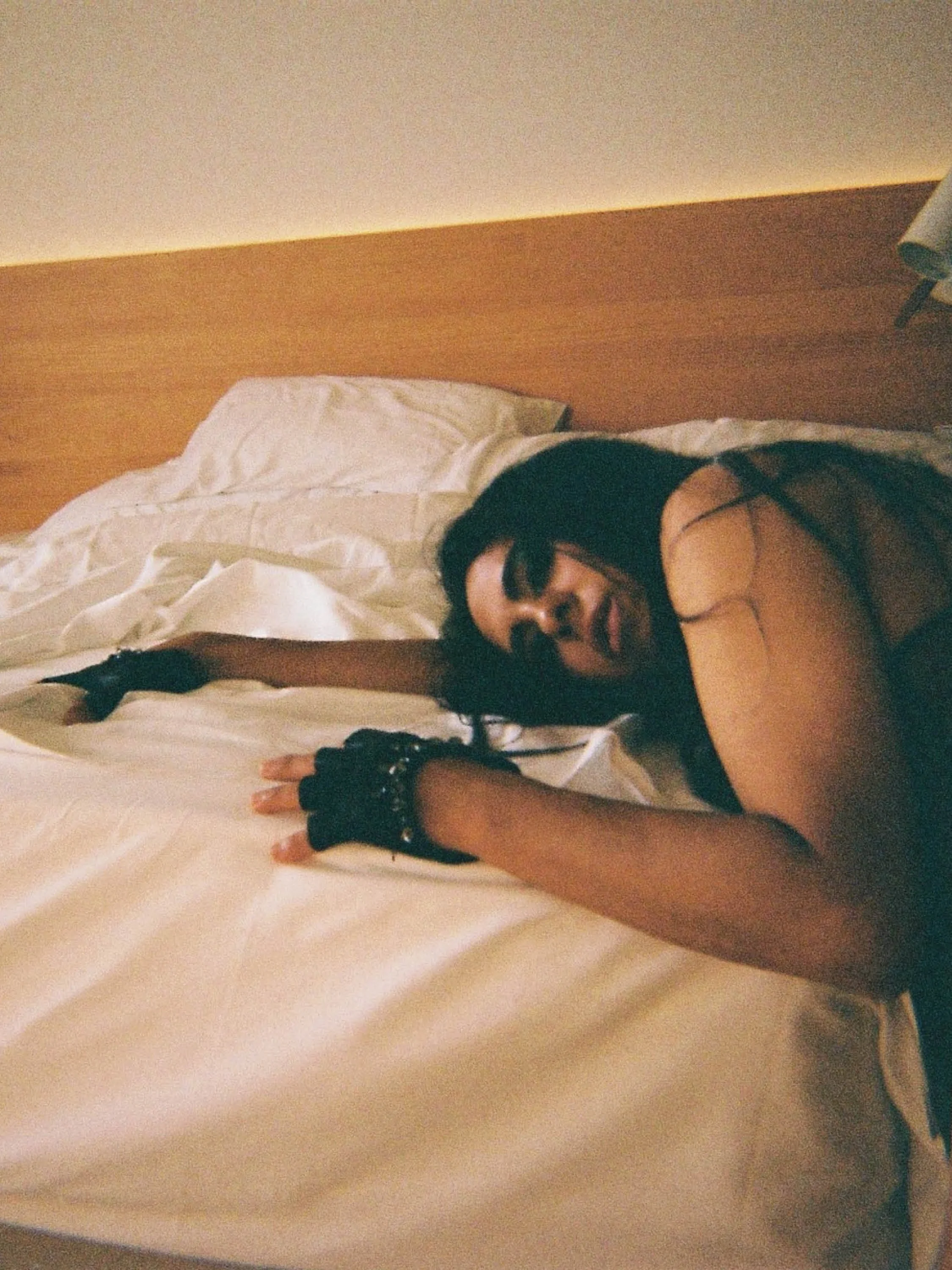
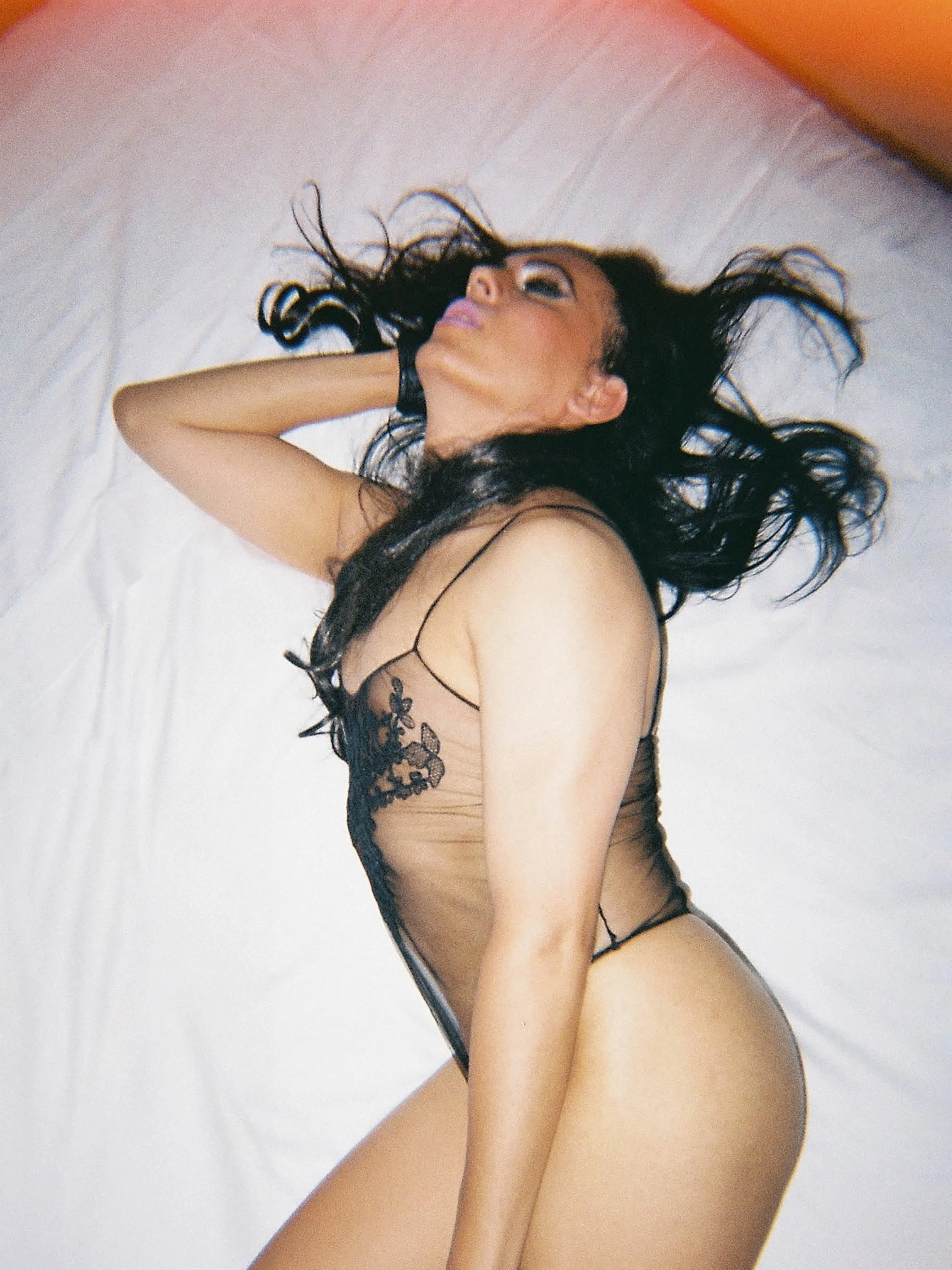
DIDIRELLA cria obras a partir do que é vulnerável, íntimo e perigoso. Entre ópera, performance, cinema e instalação, transforma arquivos reais, heranças e experiências de vida em dispositivos de prazer, emoção e encontro. A sua prática habita o entre: entre géneros, entre disciplinas e entre definições. Recusa o didatismo e a moral, preferindo uma arte crua, sensual e contraditória, onde a fragilidade se torna uma força coletiva.
*
Como descreverias a tua prática? Uma prática que passa primeiro pelo corpo. Uma gestação andrógina de uma sex-symbol futurística que vive no entre-lugares, entre-definições, entre-gêneros. Lygia Clark tem esse conceito genial: a casa é o corpo… Imagino que se a Arte fosse uma casa a minha prática ocuparia uma faixa de luz de Sol que sai da fresta entre dois tacos de madeira no chão. Sou só uma luzinha solar. Ela surge precisamente na vulnerabilidade das situações que me coloco. Algo que o universo ou alguém me deu e não eu quem fui buscar. Meu tio me deixou uma coleção de objetos de herança, alguém disse que eu era a Cleópatra de Shakespeare, na Polônia que eu era a Salomé de Wilde, aí sem entender eu procuro, investigo até encontrar. Diria que é uma prática operística no sentido de convergência de disciplinas e de liberdade na fruição: ou seja, não é multidisciplinar pois é a dramaticidade da obra, não o conceito, que decide os suportes, porque ao final ela é emocional. É o resultado de uma escuta física que vem da minha formação primordial em dança e teatro físico. O corpo, como um todo, me leva ao caminho. E o meu corpo em transição me informa um caminho menos científico e mais alquímico. Essencialmente é uma prática movida por Amor, sem remorso, sem culpa ou auto-censura... é como o Amor, complexo até para mim. Nunca sei descrever o gênero dela.
Como caracterizas o teu processo de trabalho? Diria que é ritualístico e muito feminino. Começa com uma intuição ou uma urgência, algo de que não consigo me desviar e pelo qual fico obcecada. Sou mesmo um receptáculo. Depois, inspirada por Clarice Lispector, quando diz "antes de te escrever, me perfumo toda", escolho um perfume que possa me ajudar a traduzir: para a ópera foi CHANEL Nº 5; para a Playboy e SUPERPUTA SPIRITUAL, foi Hypnotic Poison; e o próximo terá Portrait of a Lady. Me arrumo e me aproximo da "coisa" até ficar obcecada. Depois pesquiso refs. e questiono. Trabalho oito horas por dia, em média. Tardes, noites e madrugadas. Nunca pela manhã. Me tiro constantemente da zona de conforto, como se nadasse no mar bravio sem saber nadar e sem ver o fundo. Me perco, desespero e aí percebo pontos de vista não óbvios e, ainda assim, legítimos... Um exemplo é na ópera A GENTE NA BOATE SOFRE JUNTO, quando entendi que comporia um diálogo mágico entre a coleção toda do meu tio Ricardo Wagner e a obra total do maestro Richard Wagner. É legítima a conexão entre eles: obra/coleção e o nome; não racional, mágico. Uma criança entenderia. Achar o fim/fundo se torna obsessivo. Pode durar anos. Há 7 anos crio obras a partir da coleção de 1000 objetos que herdei do Ricardo, meu tio gay, HIV+, protetor máximo da minha infância. Criei ópera, filmes, videoarte, um concerto-réquiem e performances. No processo, sou amorosa; há muito pensamento ético, autocuidado, brincadeira, proteção, empatia e liberdade. O processo não pode tirar o meu tesão de viver; se tirar, eu paro e recomeço. Antes de mostrar, sempre faço experimentos concretos com público para exorcizar a obra do "eu" e colocá-la no espectro do "nosso": por isso adoro as residências artísticas.
De que forma surge a narrativa no teu trabalho? Gosto de narrativas improváveis, mas não absurdas. Não construo a partir da ficção, mas quero que pareçam tão surreais que poderiam ser. Surgem de arquivos reais, das minhas vivências mais extremas: abandono, imigração, paixão, sexo, utopia. Detesto narrativas que romantizam ou vitimizam. Quero o cru, o que lateja. Meus pais vieram da classe trabalhadora, e a alteridade é importante para mim. A narrativa não é feita para me agradar e precisa deixar de ser minha. Precisa tocar o outro, acionar nele fragilidade e tesão em viver, duas coisas que não me faltam. Acerto quando faço algo biográfico que se torna "da gente". Não me contento em ser uma trans latino-americana fazendo peças woke com cartilha de pronomes. Não sou professora de ninguém; matava aulas e, quando fiquei popular, fundei uma máfia de "passar cola" para quem sofria bullying, como eu. A Clarice me salva quando diz que, por isso, se considera uma escritora amadora. É bom abalar os puristas da ópera aproximando meu tio "mortal" da obra "imortal" do maestro. É bom fazer um réquiem para a vó de alguém, como foi feito para a Rainha Elizabeth. Ensinar é coisa séria, e não sou séria.
Até que ponto o “erro” ou o acaso fazem parte da tua prática? Se pensarmos o que significa ser trans no nosso planeta já comecei no "erro". Diariamente algo ou alguém diz que estou no planeta errado. Por isso tenho trabalhado com o motor do prazer e tudo que dá prazer é errado por si só: sorvete, spa, silêncio, rezas, sexo, gargalhadas em público, memes. Gosto menos do "erro" e mais do "quase-pronto" tipo o "Half-Baked" do Ben & Jerry's. Durante o processo me permito falhar, isso sim. Apesar de gostar que o resultado final pareça muito mais espontâneo do que realmente é, assumo que a improvisação não faz parte da minha prática. A intuição e a repetição sim. Talvez seja a minha obsessão por uma arte com menos filtro e menos censura, diria menos Millenial, no sentido de organizadinha e aristotélica. Refaço muito, reescrevo várias vezes até achar que o objeto está menos lapidado e menos intelectual. É uma contradição refazer para ser mais bruto, mas é a verdade, vivermos num tempo que é mais difícil ficar nua e crua, porque a arte vive uma era acadêmica e frígida, é preciso trabalhar muito para ser espontânea, por isso sou workaholic. Ou você é woke ou conservadora. Ou você é do bem ou do mal. Tudo é binário e maniqueísta. Te dizem coisas óbvias mas com explicações cheias de refs bibliográficas. Ninguém pode ser gente. Bicho. Bicha. Ninguém pode ser transável, ser entre, ser quase... Gosto do "half-baked" porque cria um espaço que aproxima o público e ele se sente empoderado a se entregar a mim. Porque sabe que eu não quero ensinar nada. Ele me dá o tempo dele pra fruir, eu dou a ele minha fragilidade como ser-humana, como ser-entre, o convido a entrarl. Tenho percebido que até aquele perfil clássico "o pseudo-intelectual-crítico-de-arte-que-só-veste-roupas-discretas” o famoso sobrevivente de uma-overdose de anti-depressivos, aquele que-me-trata-com-os-pronomes-corretos, até ele se entrega ao meu “half-baked”, pois fica incomodado. Quer me dar um feedback sobre o que ele considera “errado”. Inconscientemente quer punir a Natureza, mas a verdade é que nem ele aguenta mais as lições do bem viver que ele próprio consome e programa,.Enquanto “ele “enche o país de arte elitista ou woke, na mesma proporção, aumenta a dose do seu psicofármaco. “Ele” não me pune, não sinto culpa pelo “erro”, fui criada por duas mulheres muito empoderadas e um tio queer, que se vestia de bruxa. Não sou quem come a maça envenenada. Com as minhas coisas quero que as pessoas se sintam vivas, bondosas e tóxicas ao mesmo tempo, se permitam ser tristes e sexy, sentirem seguras para estarem menos anestesiadas e por isso precisam me ver vulneráveis, quase-pronta, a ponto de despedaçar. Comigo pode ser triste, o meu “erro” acolhe a tristeza. Quando ambas estamos quase-prontas nos unimos, pois ao me julgar ser "quase genial", "quase mulher", "quase pronta" as pessoas sentem a humanidade e a vida latente que late alto como cadela de rua. Me coloco sempre em perigo. E esta é minha armadilha: fazer algo que parece que é "Half-Baked" mas na verdade é Amor. O Amor é incondicional na Natureza, a Natureza não segue uma lógica linear, o feio e o belo convivem ao mesmo tempo, a verdade é que os animais e plantas têm lógicas “não naturais” de gênero e sexualidade As pessoas anestesiadas têm horror ao Amor natural porque querem uma arte expiatória que sirva de rehab (de)colonial. Eu sou um “erro”, uma ruptura naturalmente decolonial mas o que eu quero mesmo é ser uma delícia! Um gelado tipo "Half-Baked" do Ben & Jerry's. Que derrete, que te mela, que vicia.
