
HERNÂNI REIS BAPTISTA
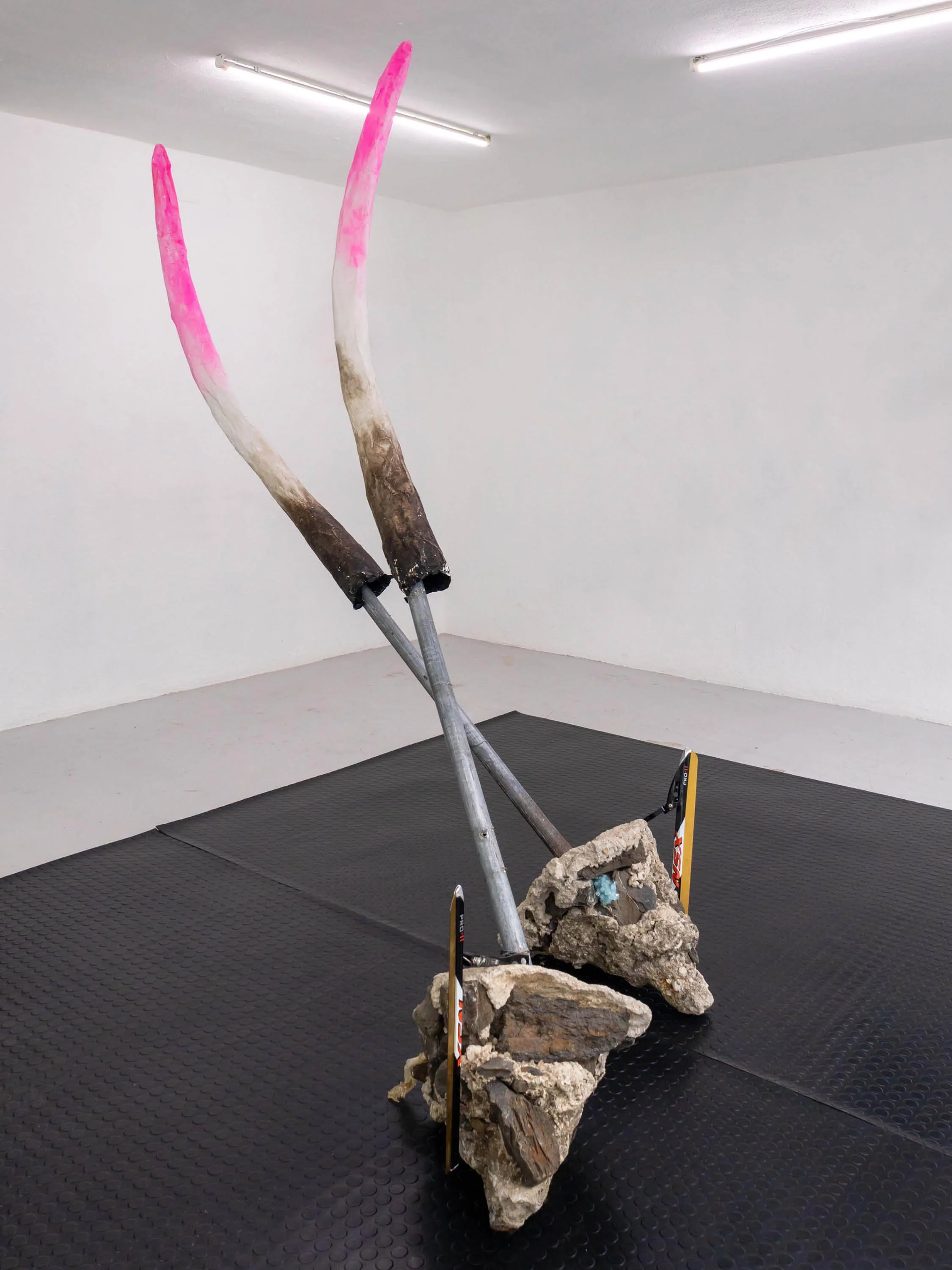
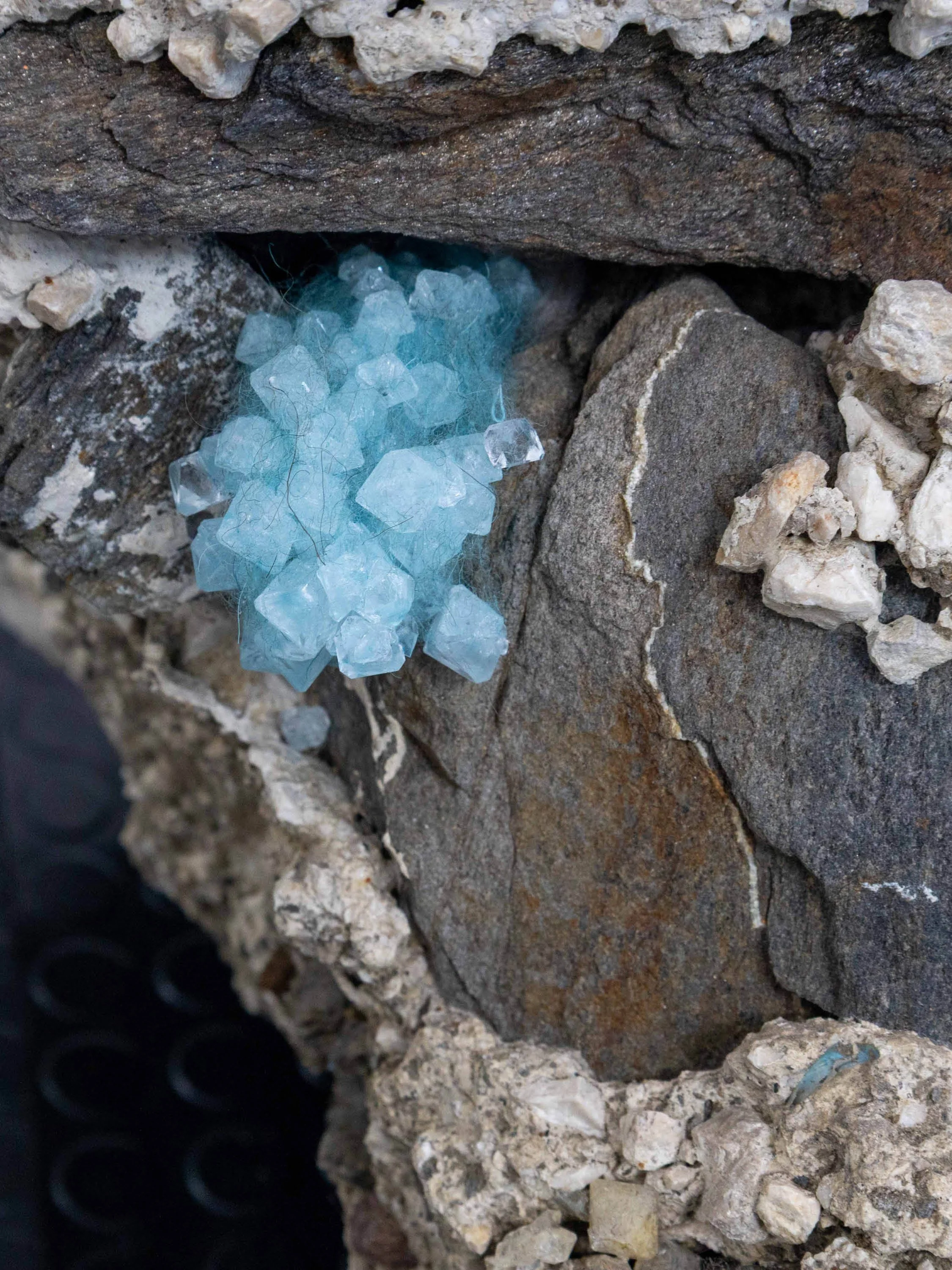
HERNÂNI REIS BAPTISTA is a visual artist whose practice focuses on the body as a symbolic, political, and affective site. Through sculpture, video, installation, and image, Hernâni explores layers of artificiality, instinct, and ruin, bringing together human, animal, and vegetal elements. Their work often uses found or repurposed materials, activating nonlinear narratives that question identity, domesticity, and the remnants of presence.
*
How would you describe your practice? Imagine wearing someone else’s shoes. They don’t fit properly; they’re tight and have been moulded by someone else's body. The worn sole makes you feel unstable. There’s a discomfort, a need for constant adjustment. Or think of a borrowed coat that is too long or short in the sleeves. It carries someone else’s smell, which may feel either familiar or strange. Still, you put on the shoes and wear the coat because you don't want to walk barefoot or be cold. Perhaps what I do emerges from that logic of misfit. It stems from my experience of the body in relation to others and the world. Rather than being stable, I see the body as a site of continuous negotiation between what is one’s own and what is imposed, as well as between the intimate and the social. I think of the body as both a surface and a construction where symbolic, affective, and political layers accumulate. A body that is constantly mediated by codes, expectations and mechanisms of protection, camouflage or exposure, as well as by instinct. I’m interested in a kind of dissonance, a place where the body never fully coincides with itself, and where these frictions remain active rather than being resolved.
How do you define your work process? The process is rarely linear or fully planned. It often begins with materials, whether found, used or recovered, that already have a presence of their own. I am fascinated by matter: what it is, what it has been and what it might become, and the different possibilities it holds. It's like trying to assemble something that didn't come with instructions. There are constant adjustments and dismantling, failed attempts and others that open unexpected paths. The work evolves through approximation rather than the execution of a fixed idea. I’m interested in this almost physical confrontation with materials, as if there were an ongoing negotiation between my intentions and what the materials allow. The studio is a space of insistence: returning, repeating, testing and leaving things suspended, only to come back to them later. It is within this rhythm of repetition and friction that the work takes shape. There are gaps, blockages and deviations, but that’s all part of the process, often, it is these that reorganise it.
How does narrative emerge in your work? From the beginning, there is a kind of constellation of ideas, images and interests that are present, albeit in a loose or unstructured way. Rather than starting from a fixed narrative, I begin with a set of elements that gradually enter into dialogue throughout the process. I often work loosely with materials, images or references that, when placed in proximity, begin to suggest possible connections. It is at this intersection that a narrative begins to emerge gradually and non-linearly. I’m not interested in clear narratives. I prefer open structures where different layers can coexist without converging into a single interpretation. There’s a logic of fragment and montage where meaning is constructed between the parts rather than from a predefined story. In a sense, narrative is always partial and unstable; it suggests more than it states.
To what extent do “error” or chance play a part in your practice? Error and chance are fundamental to the process. They are not merely tolerated; they are essential to prevent the work from becoming too predictable. Working with materials and processes that can never be fully controlled always leaves room for the unexpected. Often, it is precisely these deviations that open up new possibilities or redirect the work. I try not to immediately correct anything that doesn't match the initial intention. Instead, I try to understand what that misalignment, or “error”, might add. If everything is too controlled, the work loses tension.
HERNÂNI REIS BAPTISTA é um artista visual cuja prática se centra no corpo enquanto lugar de construção simbólica, política e afetiva. Através de escultura, vídeo, instalação e imagem, explora camadas de artificialidade, instinto e ruína, convocando elementos humanos, animais e vegetais. O seu trabalho parte muitas vezes de materiais encontrados ou recuperados, ativando narrativas não lineares que questionam a identidade, a domesticidade e os resíduos da presença.
*
Como descreverias a tua prática? Imagina a experiência de calçar os sapatos de outra pessoa. Não servem bem: apertam, já estão moldados por outro corpo, a sola gasta inclina o peso de maneira instável. Há um desconforto e uma adaptação forçada. Ou então pensa num casaco emprestado, demasiado largo, ou muito curto nas mangas. Tem o cheiro de outra pessoa, que te pode ser familiar ou estranho. Ainda assim, calças os sapatos e vestes o casaco, porque não queres andar descalço ou apanhar frio. Talvez o que faço se desenvolva nessa lógica de desajuste. Parte da minha experiência do corpo na relação com os outros e com o mundo, entendendo-o não como algo estável, mas como um lugar de negociação contínua, entre o que é próprio e o que é imposto, entre o íntimo e o social. Penso o corpo como superfície e como construção, onde se amontoam camadas simbólicas, afetivas e políticas. Um corpo continuamente mediado por códigos, expectativas e mecanismos de proteção, de camuflagem ou de exposição. E também por instinto. Interessa-me uma espécie de desfasamento: um lugar onde o corpo nunca coincide totalmente consigo mesmo, e onde essas fricções não são resolvidas, mas mantidas ativas.
Como caracterizas o teu processo de trabalho? Raramente é linear ou totalmente planeado. Muitas vezes começa com materiais, encontrados, usados ou recuperados, que já trazem uma carga própria. Tenho um fascínio pela matéria: pelo que ela é, pelo que foi e pode vir a ser, e pelas diferentes possibilidades que encerra. É como tentar montar uma coisa que não veio com instruções. Há sempre ajustes, desmontagens, tentativas que falham e outras que abrem caminhos inesperados. A partir daí, o trabalho constrói-se por aproximações, mais do que pela execução de uma ideia concreta. Interessa-me esse embate quase físico com os materiais, como se houvesse uma negociação contínua entre o que eu quero e o que eles permitem. O atelier é um espaço de insistência: voltar, repetir, testar, deixar coisas em suspenso e regressar mais tarde. É nesse ritmo de repetição e fricção que o trabalho se vai definindo. Há vazios, bloqueios e desvios, mas isso faz parte. Muitas vezes são eles que reorganizam o processo.
De que forma surge a narrativa no teu trabalho? Existe uma espécie de constelação de ideias, imagens e interesses que estão presentes desde o início, mesmo que de forma pouco ordenada. Não parto normalmente de uma narrativa fechada, mas de um conjunto de elementos que vão entrando em diálogo ao longo do processo. Trabalho frequentemente a partir de materiais, imagens ou referências soltas que, ao serem colocadas em proximidade, começam a sugerir ligações possíveis. É nesse cruzamento que a narrativa vai emergindo, de forma gradual e não linear. Não me interessam narrativas claras. Prefiro estruturas abertas, onde diferentes camadas coexistem sem se resolver numa leitura única. Há uma lógica de fragmento e de montagem, em que o sentido se constrói entre as partes, mais do que a partir de uma história pré-definida. De certa forma, a narrativa é sempre parcial e instável, que insinua, mais do que afirma.
Até que ponto o “erro” ou o acaso fazem parte da tua prática? O erro e o acaso são partes fundamentais. Não são apenas tolerados, são necessários para que o trabalho não se torne demasiado previsível. Ao trabalhar com materiais e processos que nem sempre são totalmente controláveis, há sempre espaço para o inesperado. Muitas vezes, é esse desvio que abre novas possibilidades, ou que reorienta o trabalho. Tento não corrigir imediatamente o que não corresponde à intenção inicial. Em vez disso, procuro perceber o que é que esse desajuste, ou “erro”, pode acrescentar. Se tudo estiver demasiado controlado, o trabalho perde tensão.
