
SÉBASTIEN PAUWELS
Sébastien Pauwels is a multidisciplinary artist whose practice moves between sculpture, drawing and painting, exploring the continuous translation between image and volume. Drawing on biology, geology, ancient forms and the marine world, his work embraces material processes, accidents and traces of making to construct a personal mythology suspended between abstraction and figuration.
*
How would you describe your practice? My practice revolves primarily around the medium of sculpture, while drawing extensively on the field of the image. I would readily describe it as a constant back-and-forth between the second and third dimensions: a space of negotiation in which plane and volume endlessly respond to, and translate, one another. This oscillation no doubt has its origins in a need born of my severe myopia, developed in early childhood: the need for a vision that touches, for a relationship to the world more haptic than strictly optical. My work summons several territories at once: ancient Egypt and its buried art, where drawing and volume seem to proceed from a single gesture; biology, the study of stones and of living things, and the sea above all, its way of occupying space without ever settling into it. Drawing is my primary tool. I regard it as a membrane of thought, a porous surface through which ideas seep in and transform. In its many forms, it is what informs my sculptural approach. For to my mind, sculpture is above all a form that draws itself in space. A movement from plane to volume, from sculpture to its image.
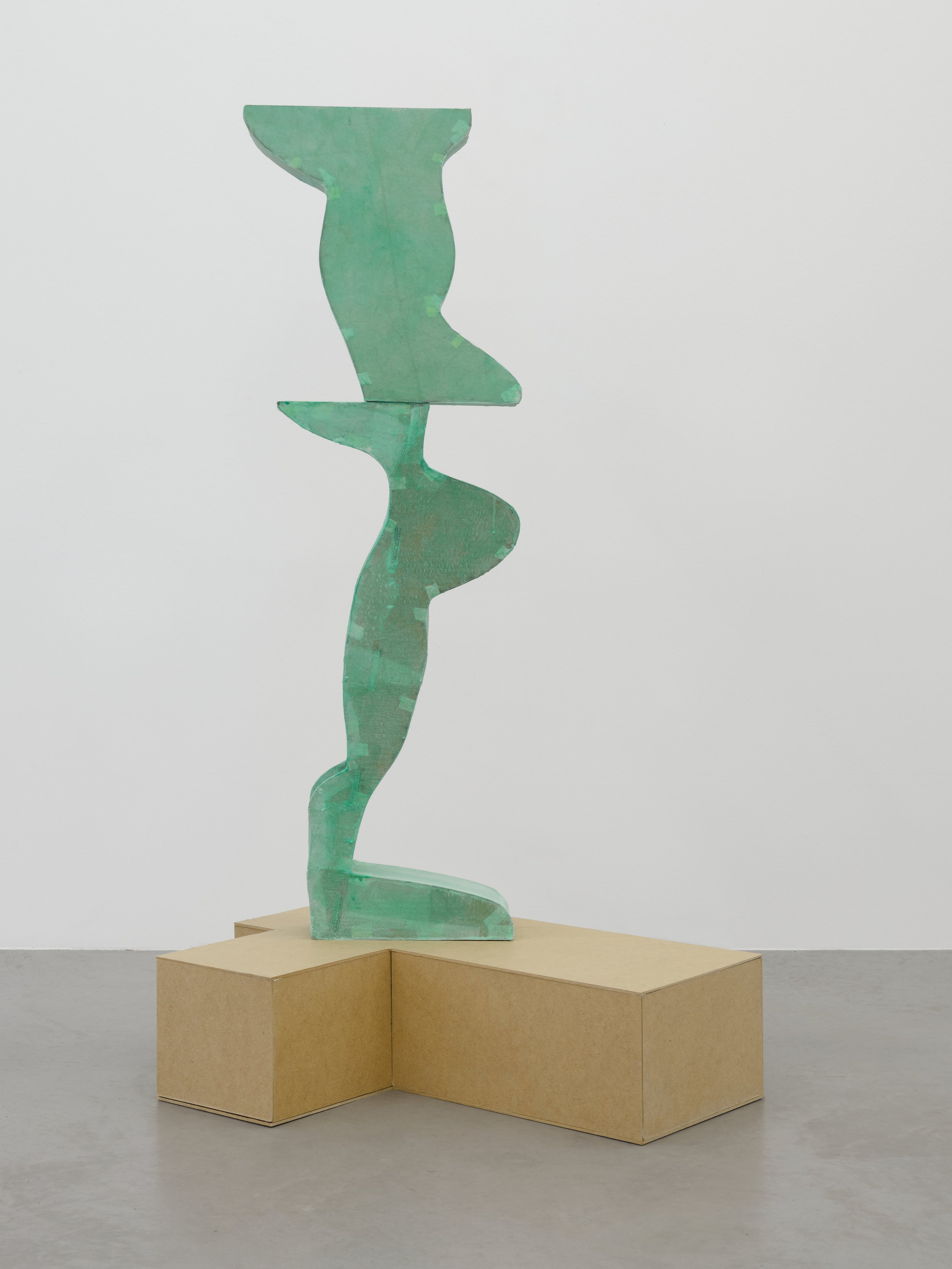
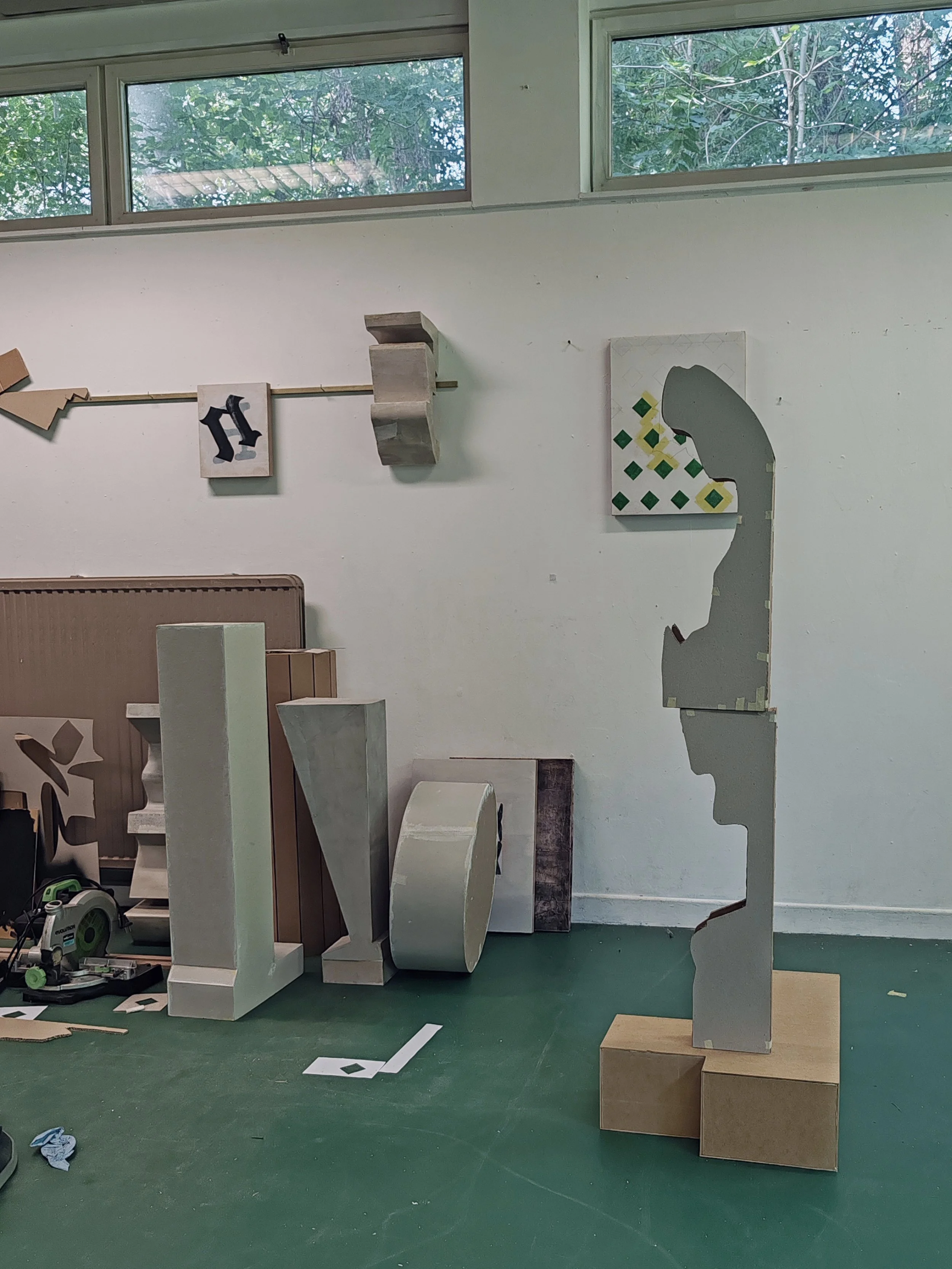
How do you define your work process? My working process is protean: it follows the medium and the object at hand. As far as volume is concerned, I have been using a principle of formal generation: I no longer work from any preparatory sketch or drawing: it is the offcuts and cut-outs from previous sculptures that serve as my drawing tool. By assembling them on the wall, they create new counterforms, which I then use in developing new sculptures. This allows me, somewhat paradoxically, to reach a more specific formal register while postponing decisions further upstream in the work. The pictorial quality of the works in volume is also central. In a way, I always have the feeling that I am talking about painting. More recently, I have started making “traditional” paintings, whereas I had always avoided that approach to the painting as an object. It is a little difficult to translate, because the French term tableau, which designates the rectangular or square format of a painting has no equivalent in English. My approach to the medium of painting is perhaps the one that plays out most instinctively, an element that is omnipresent in my practice. I have the impression that the painting-gesture unfolds in the most immediate of temporalities, while being infinitely re-playable. I have always experienced painting as a passionate struggle. And very often, the mental image present before starting the tableau collides with the material and with my physical and technical limits, deviating radically from the initial projection. I very rarely spend a prolonged amount of time thinking about what I want to see emerge. I also realize that the infusion time between ideas and forms can be extremely long. Sometimes years pass before I return to a project, or an image, that had crossed my mind at the time.
How does narrative emerge in your work? For me, the question of narrative is intimately linked to both the previous and the next question. In fact, it runs through the entire questionnaire. I place the narrative axis at the very source of what has always driven me to intervene in the world in this way, whether through drawing, sculpture, painting, or music, that other medium which holds a strong place in my existence. I spoke of my early myopia: here is already a narrative extension. What is the actual and speculative part of this given? I like the idea of building a personal mythology through the work. The place where this narrative expresses itself most is undoubtedly the working process itself. First, through the traces of fabrication, pours and other seams, kept and integrated into the result: a way of telling the making. Accidents, drips and other mistakes act as markers in the archaeology of the work. This narrative is then taken up by the viewer, who may freely trace their way back through these same clues in the making of the work or choose to engage with the formal register proposed by my sculptures, which always sit halfway between abstraction and figuration.
To what extent do “error” or chance play a part in your practice? I don’t know whether chance has a place when it comes to the things of art. Error, on the other hand, can be considered a form of chance: an opening onto a new field of possibilities. If, in the past, I may have claimed to control mistakes, today I welcome them with joy. The true error, the fertile error, cannot, in fact, be provoked. In this same logic of pushing back the decision-making axis, I see error as a precious emissary come to thwart the ego. It reminds us that the work and the making always exceed us. In truth, things are often better when I mess up. Error also has a fundamental place in the creation of the living, not in a Darwinian view of the best adapted, but rather as the emergence of new forms of life. In this context, the figure of coral and its multiple branching appeals to me particularly. Horst Bredekamp speaks of it admirably in his book Darwin’s Corals. I also always keep in mind Walter Swennen and the distinction he makes between the strategist and the tactician: on the one hand, the will to control; on the other, resourcefulness on the ground. The former is condemned to make a simulacrum of a painting; the latter might, finally, make a tableau.
Sébastien Pauwels é um artista multidisciplinar cuja prática se desenvolve entre a escultura, o desenho e a pintura, explorando a contínua tradução entre imagem e volume. Inspirando-se na biologia, na geologia, em formas ancestrais e no universo marinho, o seu trabalho incorpora processos materiais, acidentes e vestígios do fazer para construir uma mitologia pessoal suspensa entre a abstração e a figuração.
*
Como descreverias a tua prática? A minha prática centra-se sobretudo no meio da escultura, embora recorra extensivamente ao campo da imagem. Descreveria-a prontamente como um movimento constante de vaivém entre a segunda e a terceira dimensões: um espaço de negociação em que o plano e o volume respondem incessantemente um ao outro e se traduzem mutuamente. Esta oscilação tem, sem dúvida, a sua origem numa necessidade decorrente da minha miopia severa, desenvolvida durante a primeira infância: a necessidade de uma visão que toque, de uma relação com o mundo mais háptica do que estritamente ótica. O meu trabalho convoca vários territórios em simultâneo: o Antigo Egito e a sua arte enterrada, onde o desenho e o volume parecem resultar de um único gesto; a biologia, o estudo das pedras e dos seres vivos, e sobretudo o mar, a sua forma de ocupar o espaço sem nunca nele se fixar. O desenho é a minha principal ferramenta. Vejo-o como uma membrana do pensamento, uma superfície porosa através da qual as ideias se infiltram e se transformam. Nas suas múltiplas formas, é ele que orienta a minha abordagem à escultura. Porque, para mim, a escultura é, acima de tudo, uma forma que se desenha no espaço. Um movimento do plano para o volume, da escultura para a sua imagem.
Como caracterizas o teu processo de trabalho? O meu processo de trabalho é proteiforme: acompanha o meio e o objeto em questão. No que diz respeito ao volume, tenho vindo a utilizar um princípio de geração formal: já não trabalho a partir de qualquer esboço ou desenho preparatório; são as sobras e os recortes de esculturas anteriores que funcionam como a minha ferramenta de desenho. Ao dispô-los na parede, criam novas contraformas, que utilizo depois no desenvolvimento de novas esculturas. Isto permite-me, de forma algo paradoxal, alcançar um registo formal mais específico, ao mesmo tempo que adio as decisões para uma fase mais avançada do trabalho. A qualidade pictórica das obras em volume é também central. De certa forma, tenho sempre a sensação de estar a falar de pintura. Mais recentemente, comecei a fazer pinturas «tradicionais», ao passo que sempre tinha evitado essa abordagem da pintura enquanto objeto. É um pouco difícil de traduzir, porque o termo francês tableau, que designa o formato retangular ou quadrado de uma pintura, não tem um equivalente direto em inglês. A minha abordagem ao meio da pintura é talvez aquela que se manifesta de forma mais instintiva, um elemento omnipresente na minha prática. Tenho a impressão de que o gesto pictórico se desenrola na temporalidade mais imediata, sendo, ao mesmo tempo, infinitamente repetível. Sempre vivi a pintura como uma luta apaixonada. E, muito frequentemente, a imagem mental presente antes de iniciar o tableau entra em colisão com a matéria e com os meus limites físicos e técnicos, desviando-se radicalmente da projeção inicial. Muito raramente passo um período prolongado a pensar naquilo que quero ver surgir. Percebo também que o tempo de maturação entre as ideias e as formas pode ser extremamente longo. Por vezes, passam-se anos até regressar a um projeto ou a uma imagem que me tinha atravessado o pensamento naquele momento.
De que forma surge a narrativa no teu trabalho? Para mim, a questão da narrativa está intimamente ligada tanto à questão anterior como à seguinte. Na verdade, atravessa todo o questionário. Coloco o eixo narrativo na própria origem daquilo que sempre me levou a intervir no mundo desta forma, seja através do desenho, da escultura, da pintura ou da música, esse outro meio que ocupa um lugar importante na minha existência. Falei da minha miopia precoce: aí está já uma extensão narrativa. Qual é, afinal, a parte real e a parte especulativa deste dado? Gosto da ideia de construir uma mitologia pessoal através do trabalho. O lugar onde esta narrativa mais claramente se expressa é, sem dúvida, o próprio processo de trabalho. Primeiro, através dos vestígios da produção, das vazagens e de outras emendas, que são preservados e integrados no resultado: uma forma de contar o próprio processo de criação. Os acidentes, os escorridos e outros erros funcionam como marcadores na arqueologia da obra. Esta narrativa é depois retomada pelo espectador, que pode livremente refazer o percurso através dessas mesmas pistas presentes na construção da obra ou optar por envolver-se com o registo formal proposto pelas minhas esculturas, que se situam sempre a meio caminho entre a abstração e a figuração.
Até que ponto o “erro” ou o acaso fazem parte da tua prática? Não sei se o acaso tem lugar quando se trata das coisas da arte. O erro, por outro lado, pode ser considerado uma forma de acaso: uma abertura para um novo campo de possibilidades. Se, no passado, talvez tenha afirmado que controlava os erros, hoje acolho-os com alegria. O verdadeiro erro, o erro fértil, não pode, na realidade, ser provocado. Nesta mesma lógica de fazer recuar o eixo da tomada de decisão, vejo o erro como um precioso emissário que vem contrariar o ego. Recorda-nos que a obra e o próprio processo de criação nos excedem sempre. Na verdade, as coisas são frequentemente melhores quando me engano. O erro ocupa também um lugar fundamental na criação do que é vivo, não numa perspetiva darwiniana do mais bem adaptado, mas antes enquanto emergência de novas formas de vida. Neste contexto, a figura do coral e as suas múltiplas ramificações exercem sobre mim um particular fascínio. Horst Bredekamp aborda esta questão de forma admirável no seu livro Darwin’s Corals. Tenho também sempre presente Walter Swennen e a distinção que estabelece entre o estratega e o tático: por um lado, a vontade de controlar; por outro, a capacidade de encontrar soluções no terreno. O primeiro está condenado a produzir um simulacro de uma pintura; o segundo poderá, finalmente, fazer um tableau.
