
2 Dec — 5 Jan 2024 | ÉVORA
Emotional Derbies
Curated by Rita Silveira Machado
Bartolomeu Santos
Esta dicotomia entre pertença e alienação habita a prática artística de Bartolomeu Santos. Enquanto se adapta às pessoas e aos espaços que o rodeiam, bem como aos conflitos que essas interações geram, o artista recorre ao atelier como um espaço de resolução desses problemas.
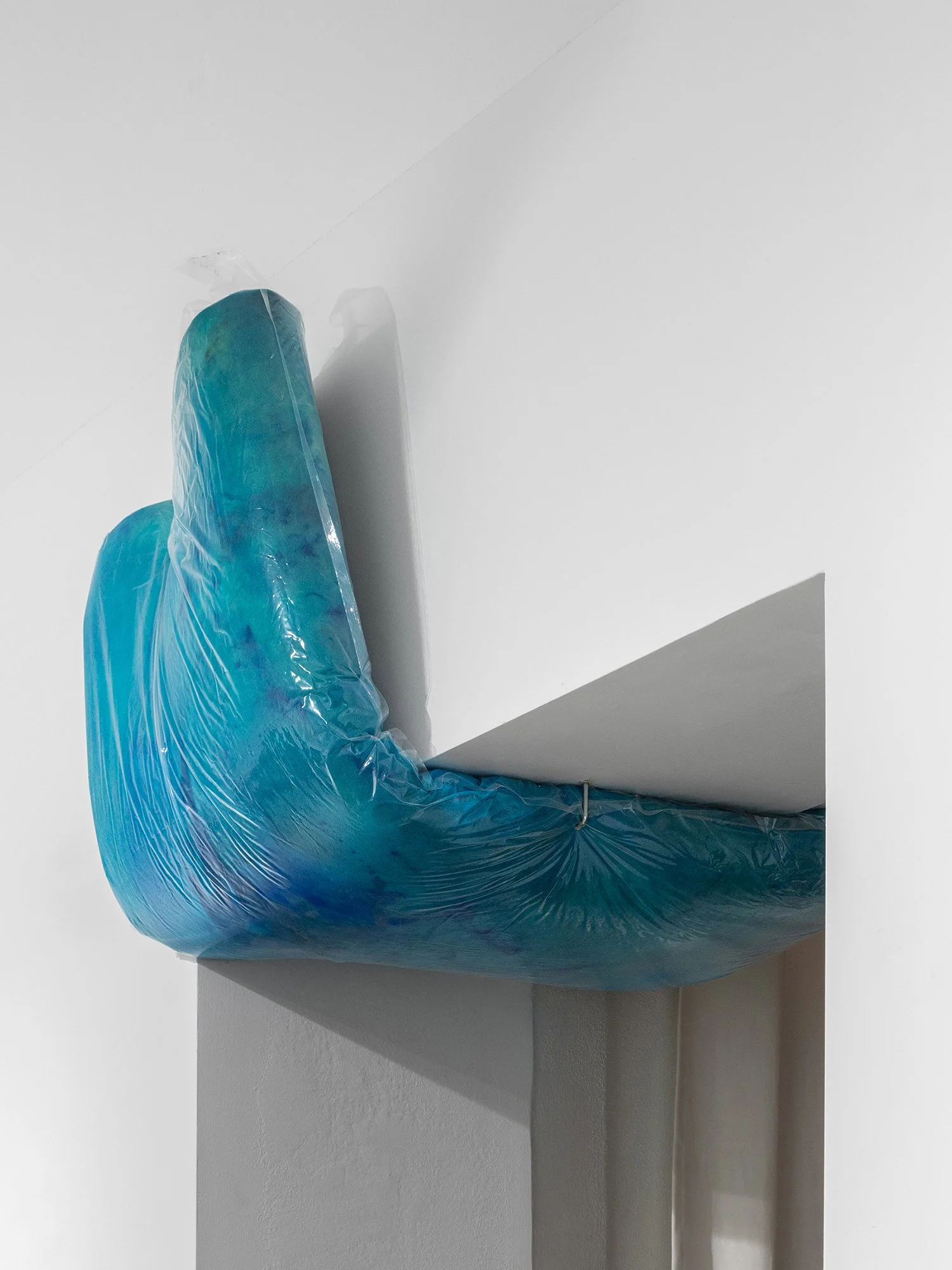
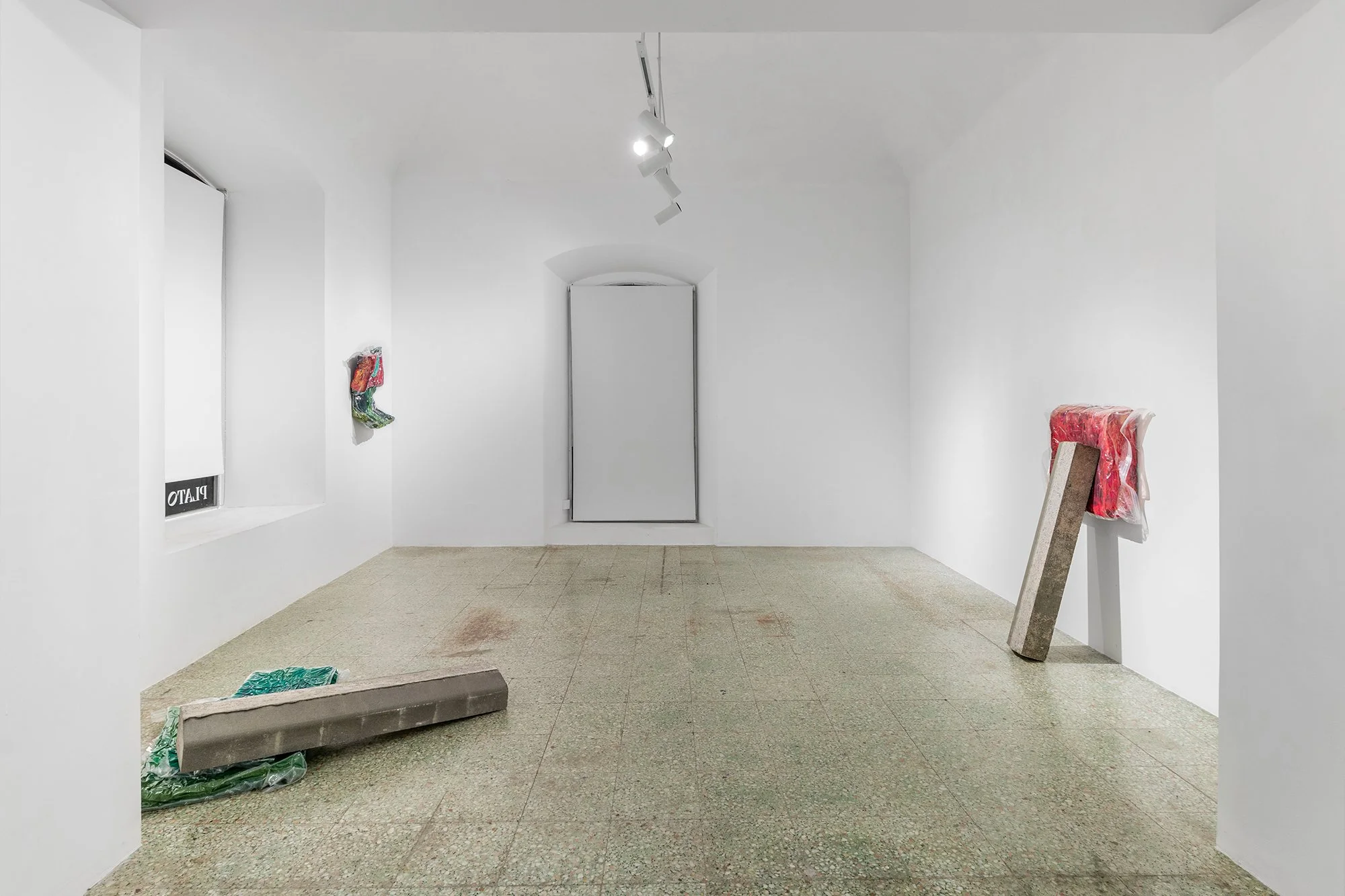
Ao explorar o atelier como um espaço seguro para a experimentação, o trabalho de Bartolomeu nasce da esperança de que a procura de soluções práticas e visuais para as suas obras possa também conduzir à transformação dos seus próprios diálogos e conflitos interiores. Com o passar do tempo, as ferramentas do seu trabalho tornaram-se cada vez mais relevantes. As esculturas em esponja aqui apresentadas foram inicialmente utilizadas para pintar telas. À medida que foi descobrindo as suas qualidades plásticas, o artista decidiu elevá-las ao estatuto de escultura. Estes "acidentes" acontecem de forma recorrente e constituem a base da prática de Bartolomeu, na qual o próprio processo artístico se transforma, pouco a pouco, em obra.
As esculturas possuem uma natureza adaptável: são simultaneamente estáticas e flexíveis. Moldam-se ao espaço e alteram-se ligeiramente sempre que são instaladas, através do gesto performativo de retirar o ar dos sacos e comprimir as formas. Com o tempo, o ar volta lentamente a entrar no vácuo e a esponja recupera a sua forma original. As esculturas tornam-se mais macias, acompanhando a mutação natural do material.
O derby é um momento de tensão em que cada lado procura conquistar aquilo que pertence ao outro. Alguém tem de ganhar ou perder, mas poderá haver um empate? Afinal, se estes duelos existem apenas no curto prazo, terão verdadeira relevância a longo prazo? Emotional Derbies é uma exposição sobre o peso das escolhas, a tensão que elas criam em quem as toma e o impacto que exercem sobre os outros. O artista parte do debate interior e da fricção gerada pelas nossas escolhas (por vezes impostas) para encontrar uma resolução tangível. É na sua obra que "desempata" o conflito.
This dichotomy of belonging and alienation inhabits Bartolomeu Santos’ artistic practise. While adapting to the people and spaces that surround him, as well as the conflicts that such interactions create, the artist turns to the studio as a space for the resolution of these problems.
By exploring the studio as a safe space for experimentation, Bartolomeu’s work is born from the hope that finding practical and visual solutions to his artworks, might also lead to the transformation of his own internal dialogues and conflicts. Over time, the artist’s work tools became increasingly relevant. The sponge like sculptures, presented here, were primarily used to paint canvases. By slowly discovering their artistic qualities, the artist decided to elevate them to the status of sculpture. These “accidents” happen recurrently and form the basis of Bartolomeu’s practice in which the artistic process ends up transforming, little by little, into artworks.
The sculptures have an adaptable nature, they are simultaneously static and flexible. They mold to the space and change slightly each time they are installed through the performative act of removing the air from the bags and constraining the shapes. Over time, air begins to slowly enter the vacuum and the sponge returns to its original shape. The sculptures become softer, following the natural mutation of the material.
The Derby is a tense moment where each side pushes for what the other has. Someone must win or lose, but can there be a draw? After all, if these duels only exist in the short term, will they be relevant in the long term? Emotional Derbies is an exhibition about the weight of choices, the tension they create in those who make them, and their impact on others. The artist starts from the internal debate and the friction that arises from our choices (sometimes forced) to find a tangible resolution. His work is where he “breaks the tie” of the conflict.

Bartolomeu Santos | Emotional Derbies
Bartolomeu Santos | Emotional Derbies

Bartolomeu Santos | Emotional Derbies

Bartolomeu Santos | Emotional Derbies
Bartolomeu Santos | Emotional Derbies

Bartolomeu Santos | Emotional Derbies

Bartolomeu Santos | Emotional Derbies

Bartolomeu Santos | Emotional Derbies

Bartolomeu Santos | Emotional Derbies

Bartolomeu Santos | Emotional Derbies
Bartolomeu Santos | Emotional Derbies

Bartolomeu Santos | Emotional Derbies