12 — 26 Sep 2026 | ÉVORA
Dramma Giocoso
Luísa Serôdio
Exhibition Text by António Guerreiro
Uma Irresistível Pulsão Lúdica
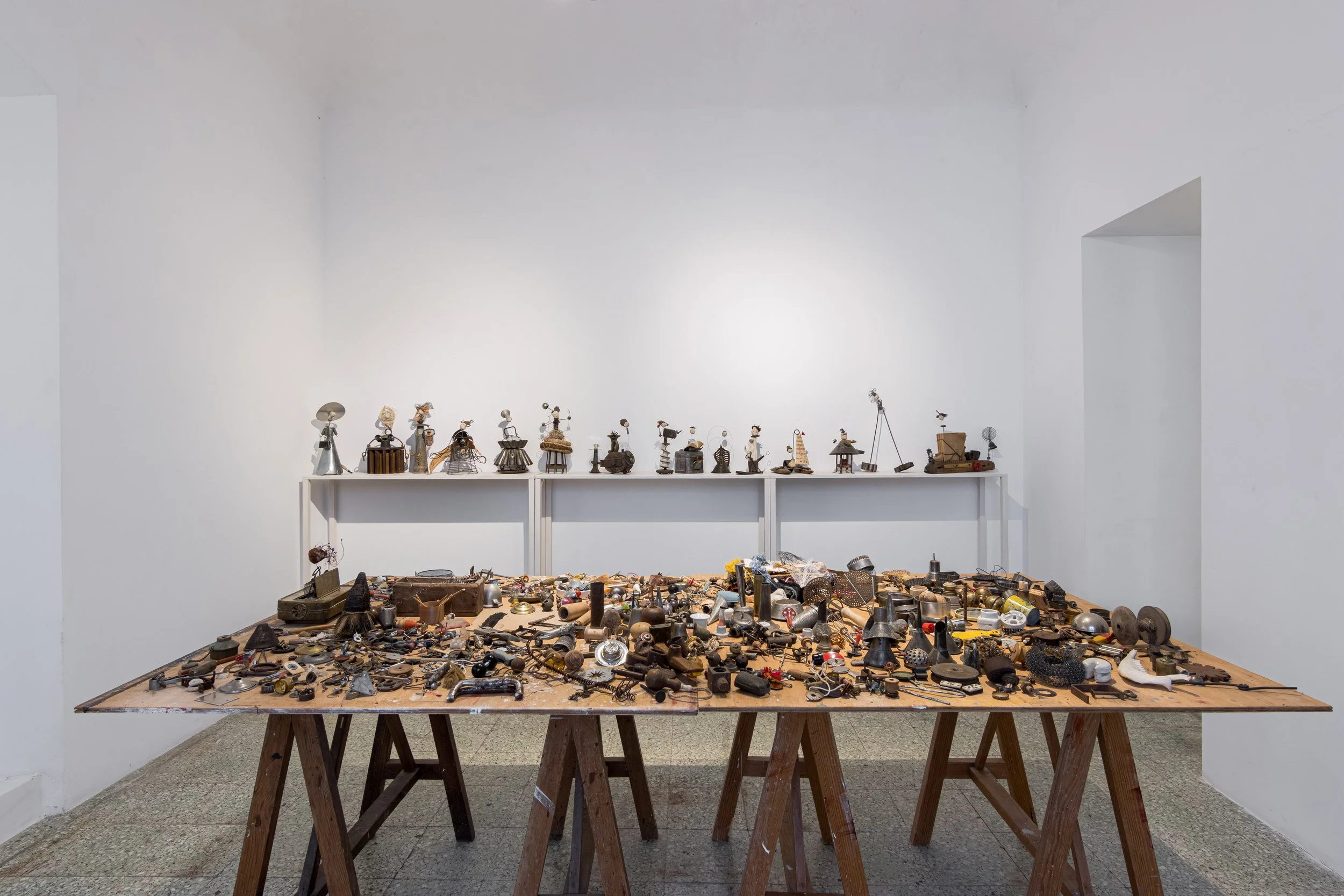
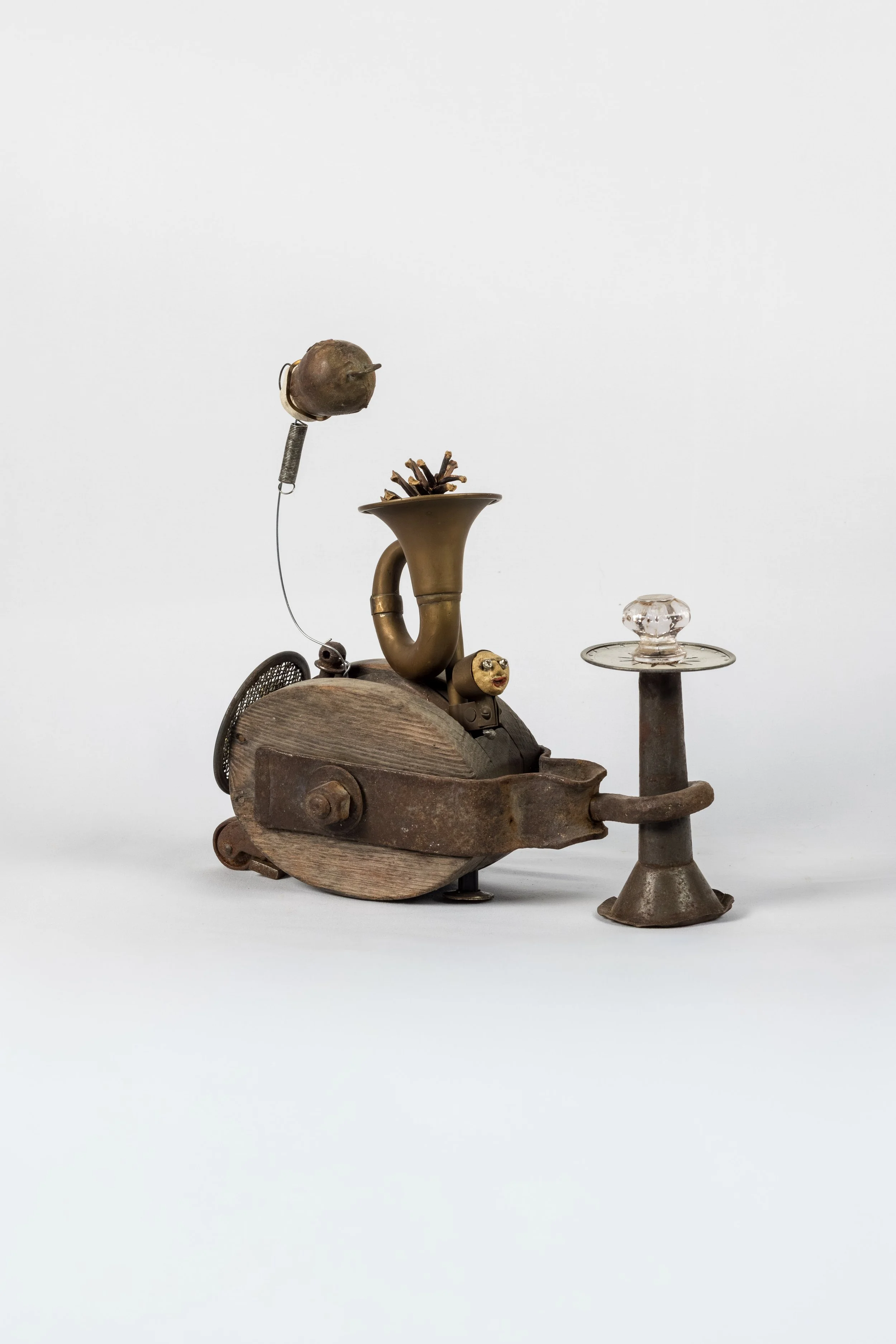
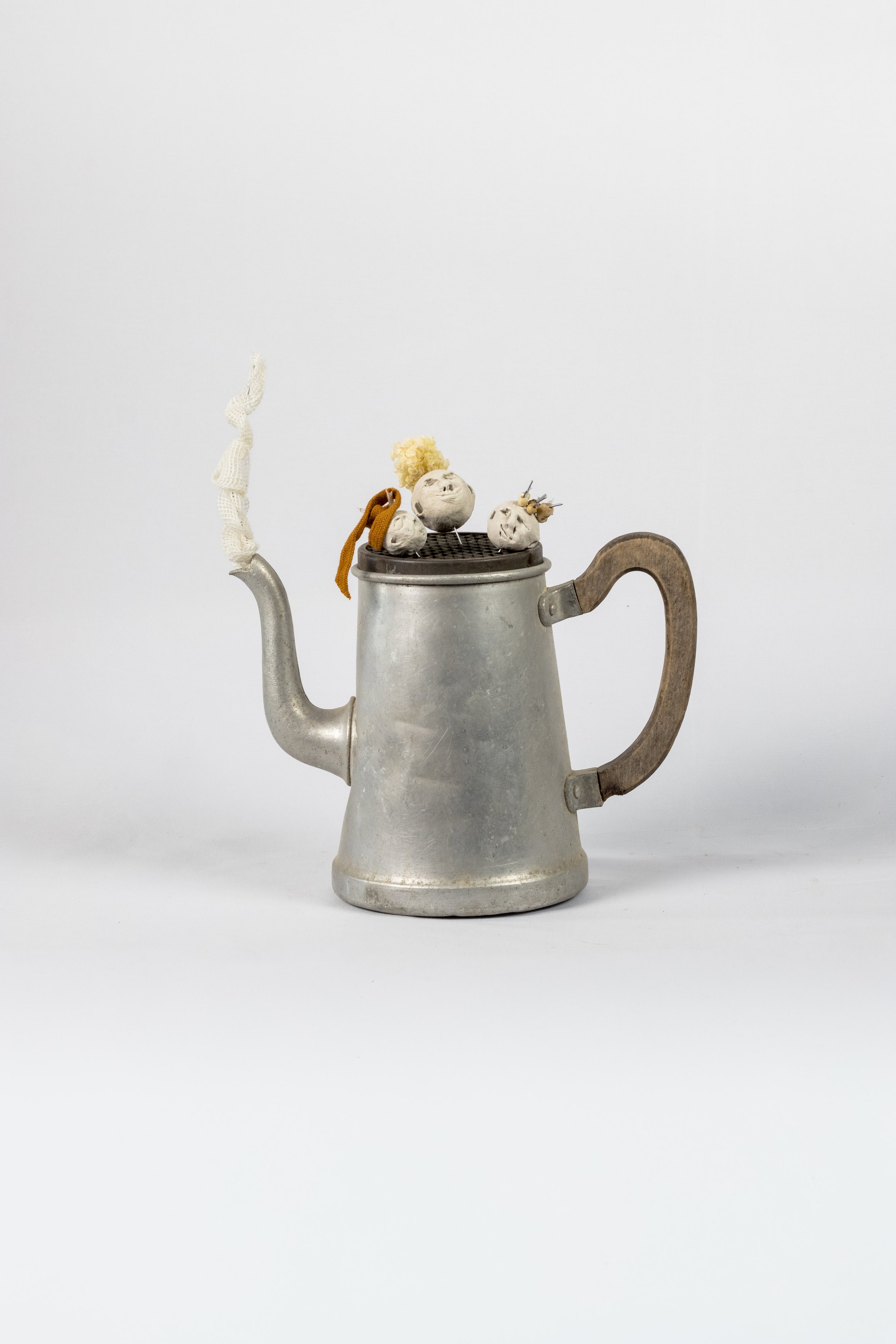
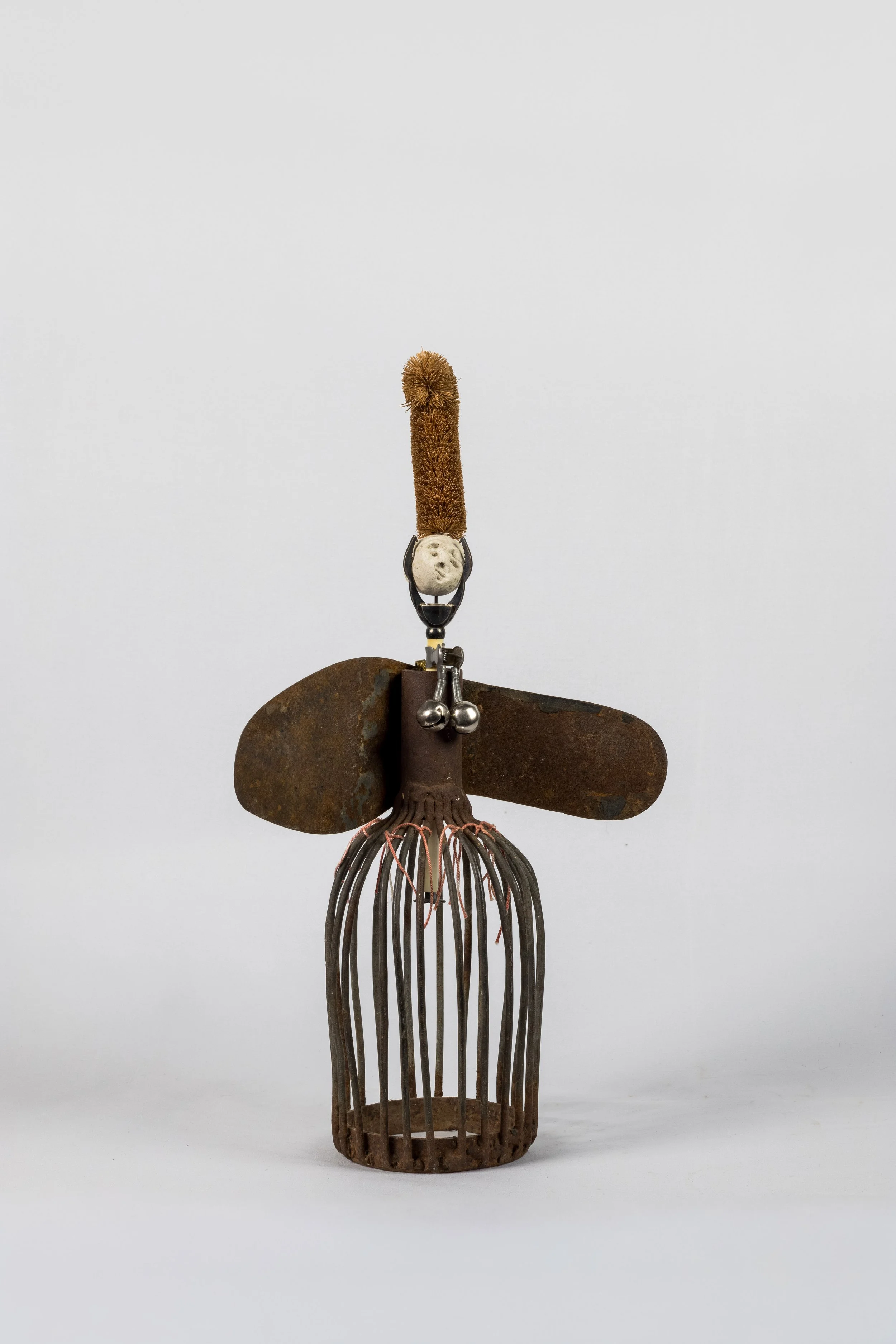
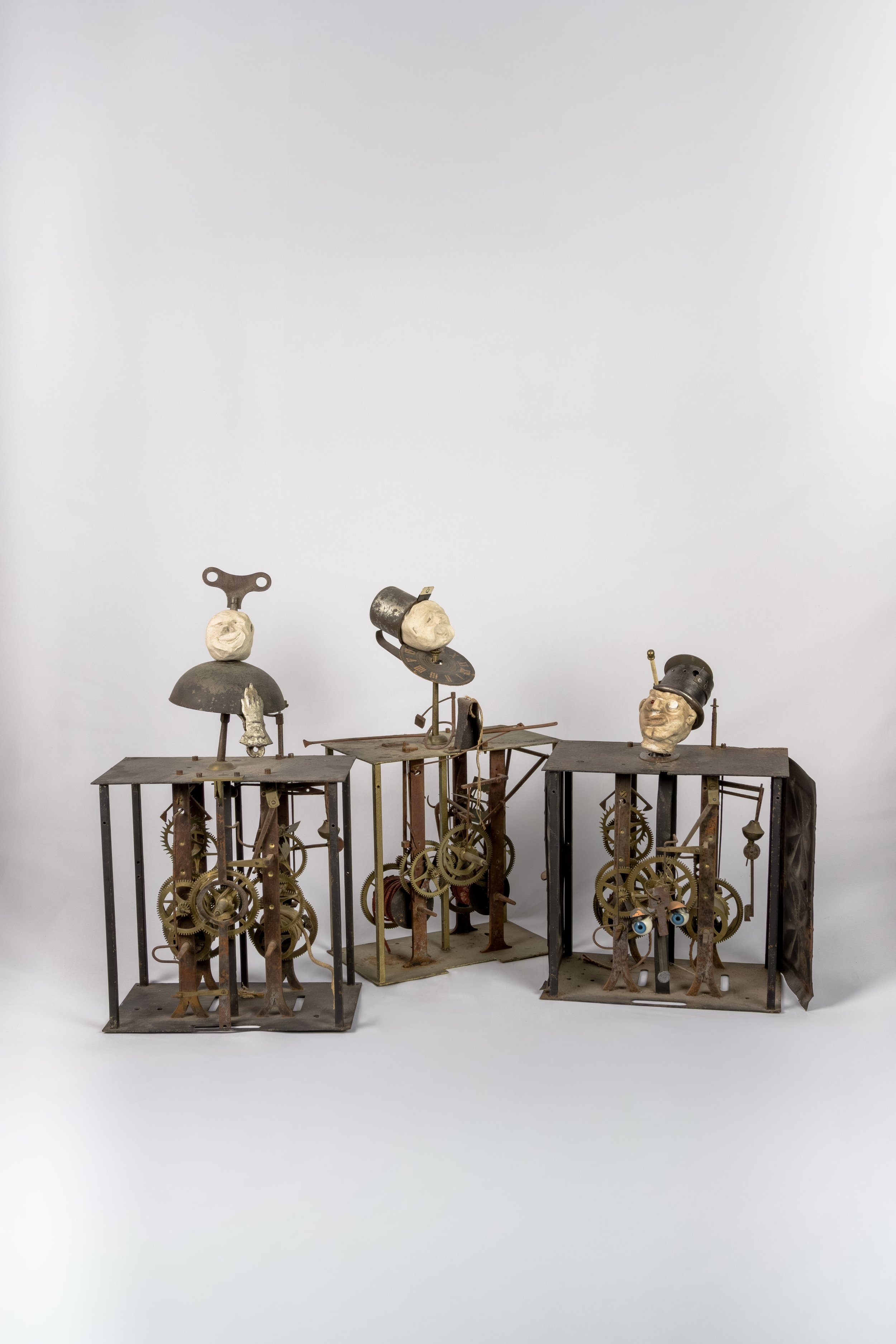
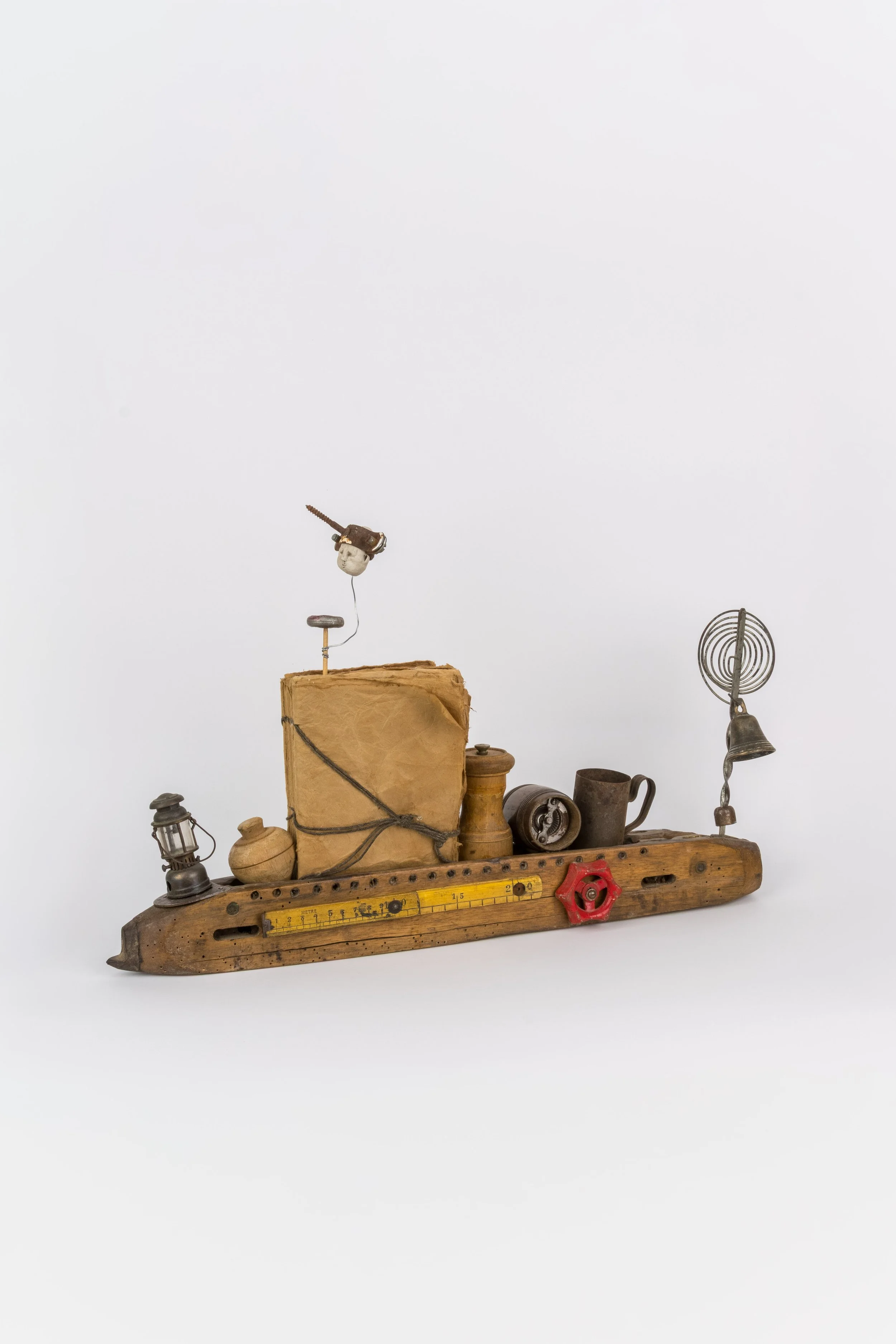
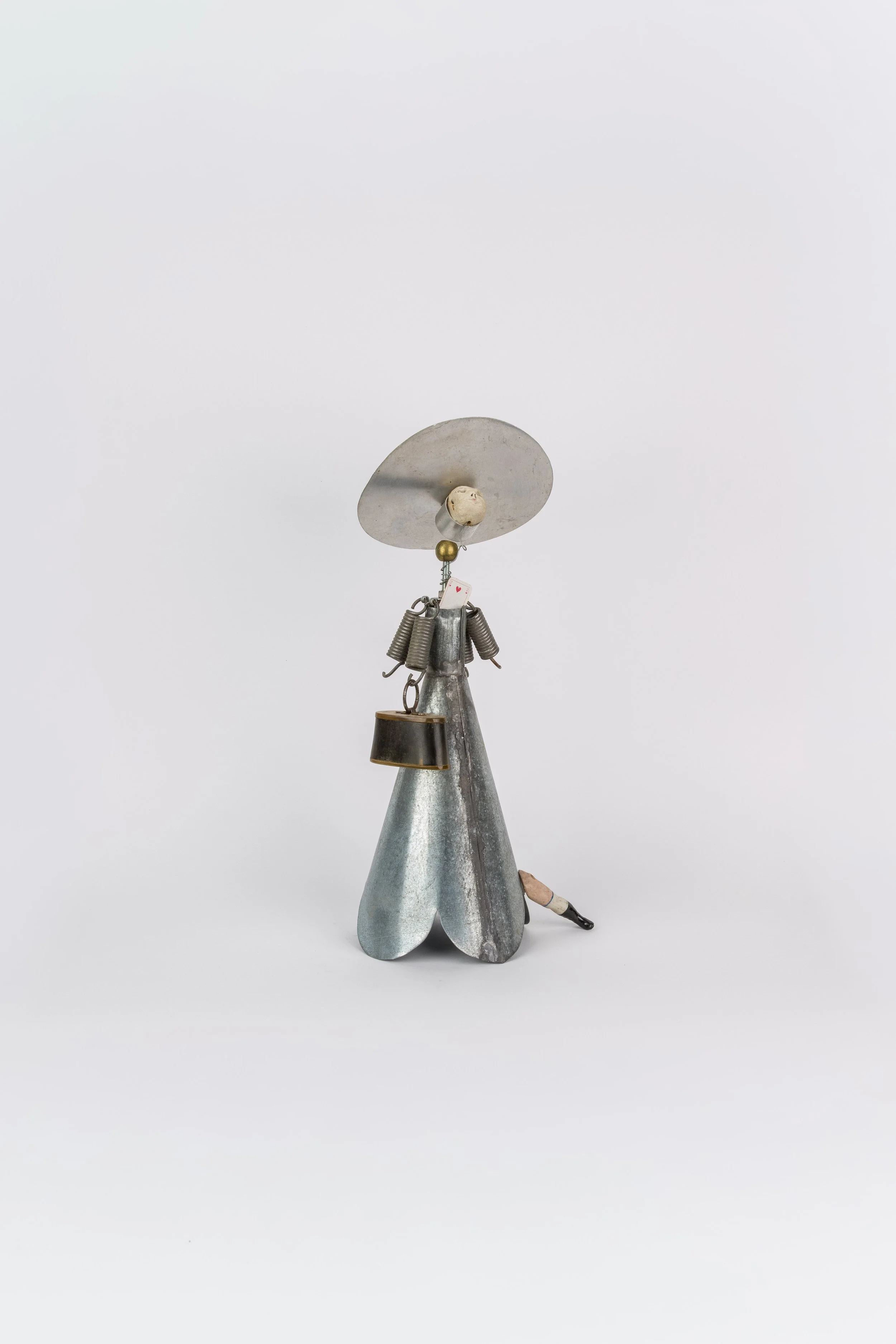
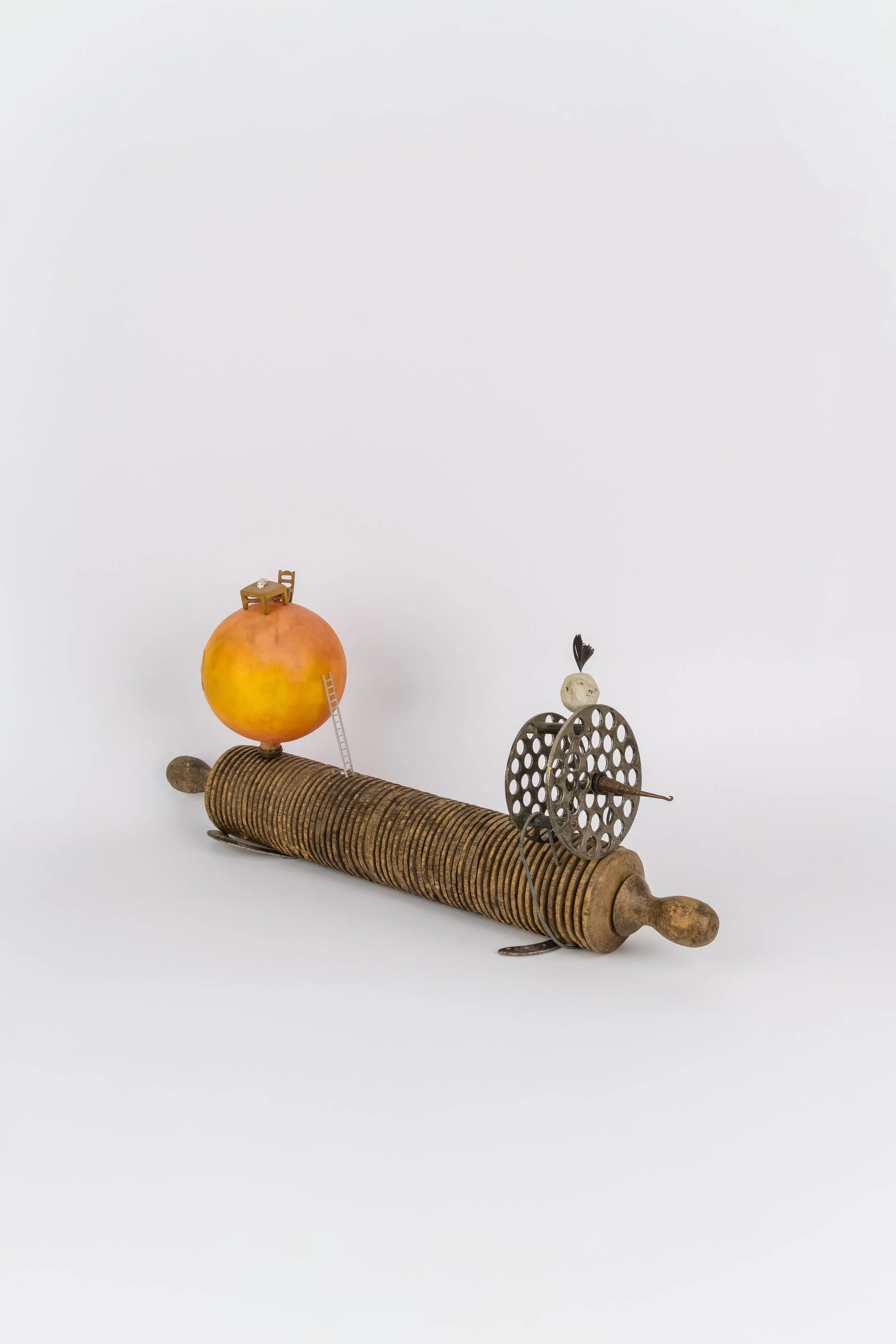
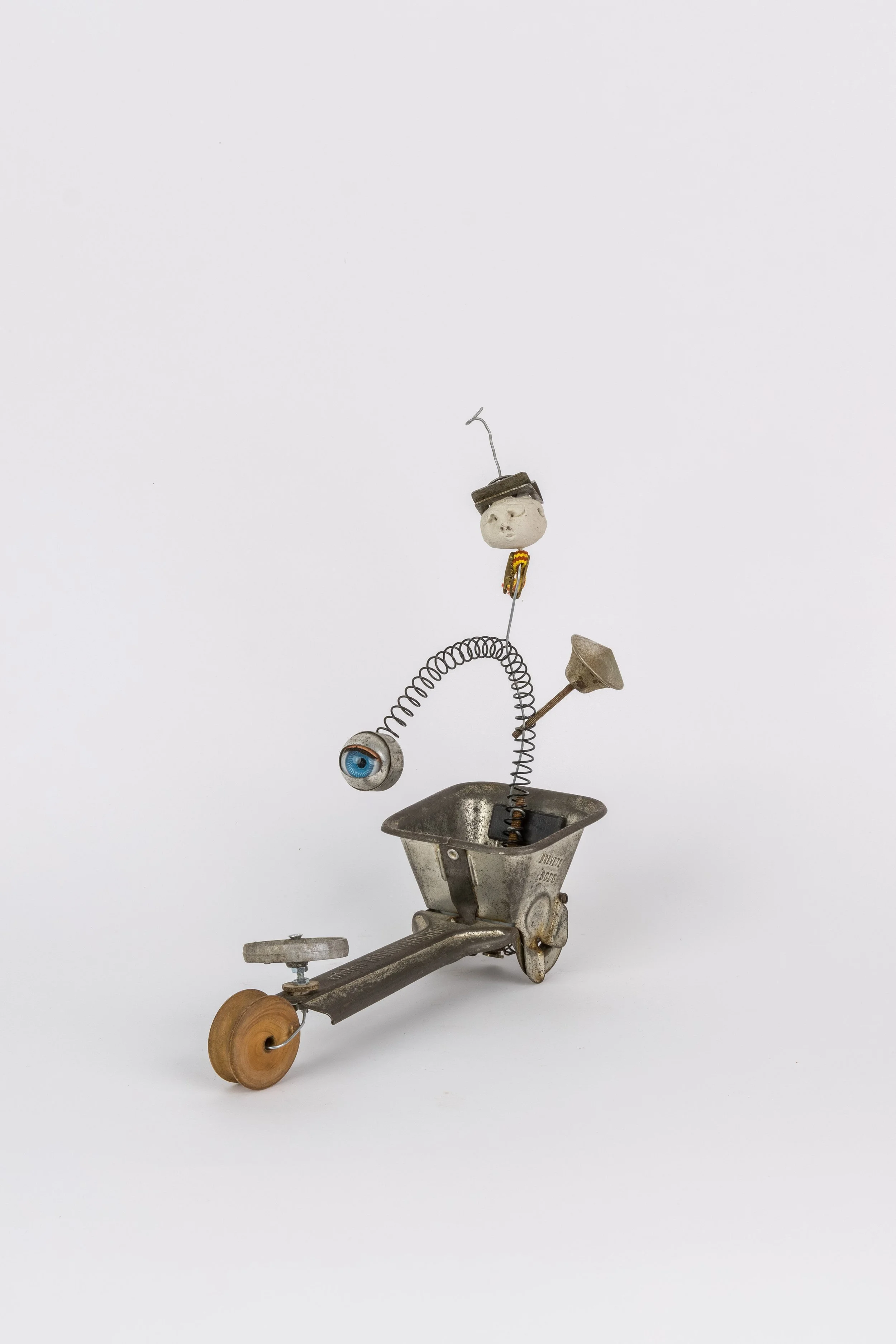
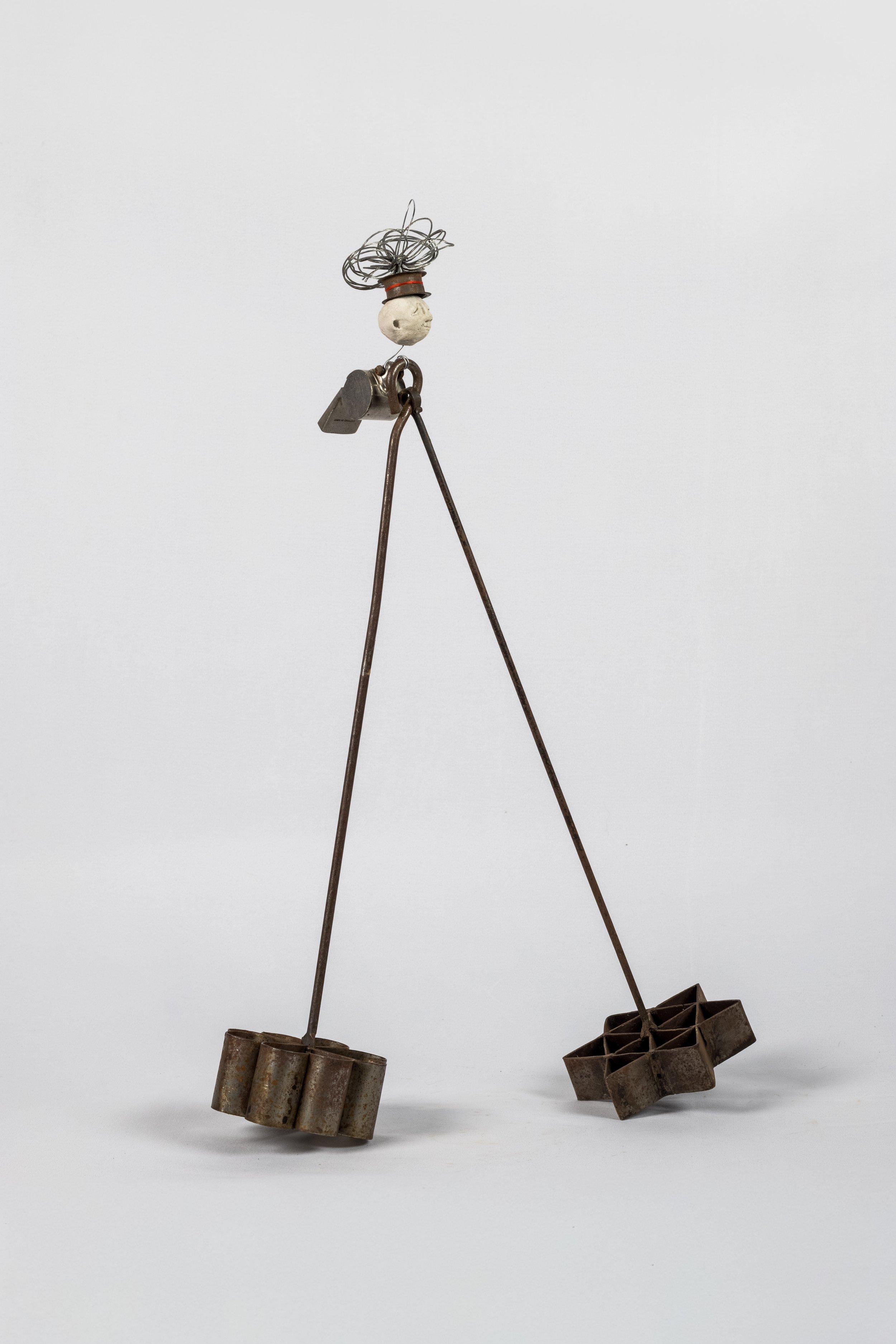
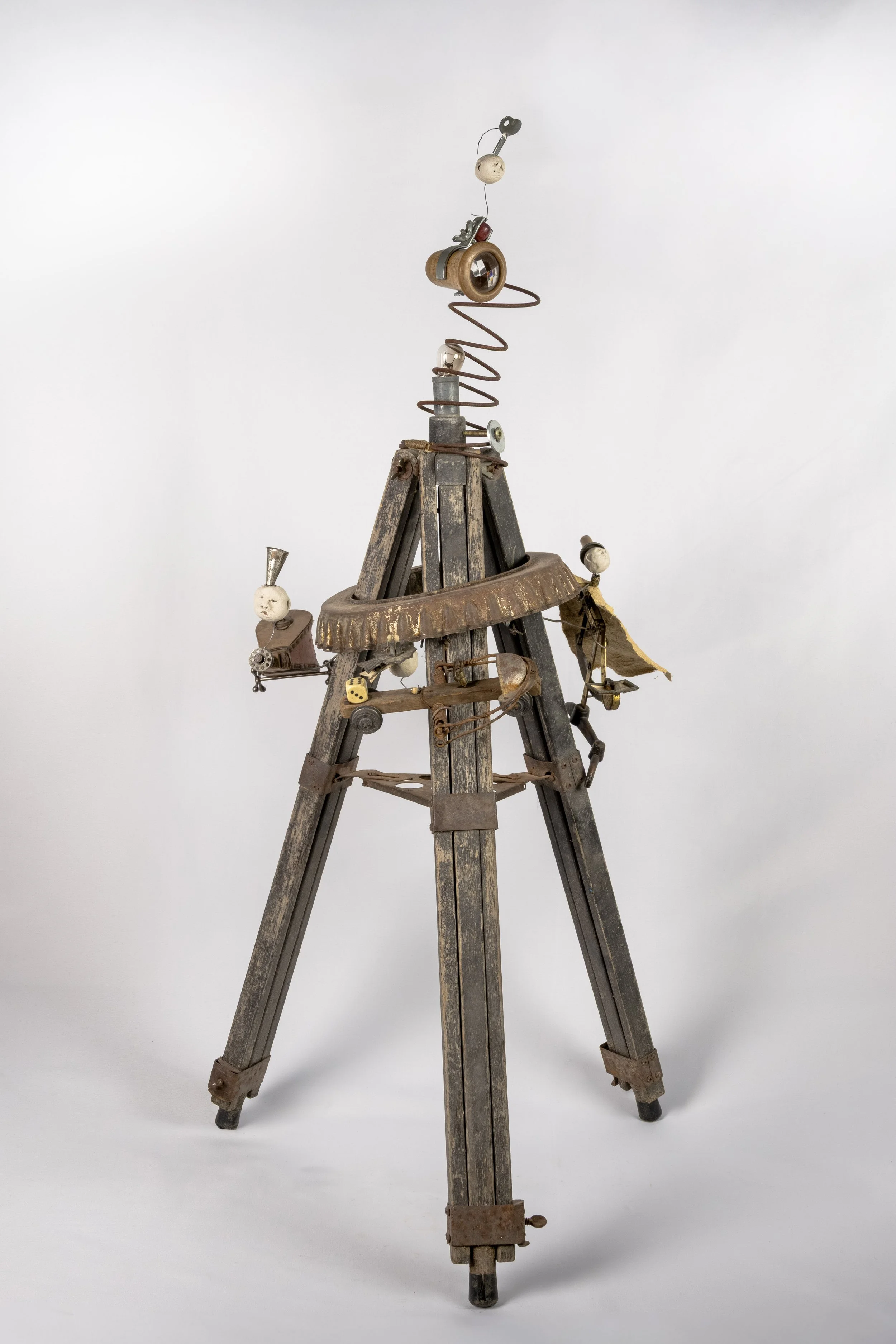
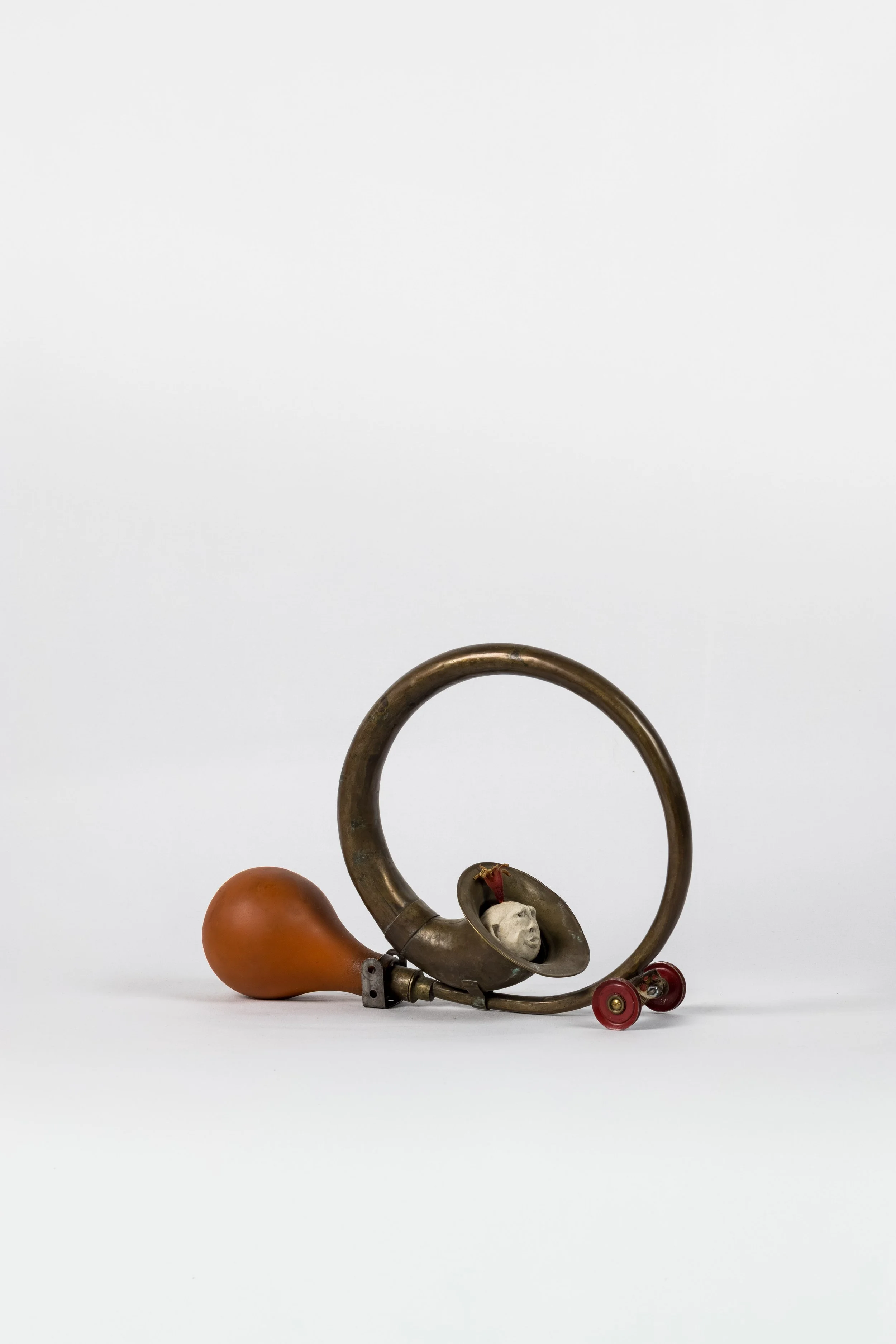
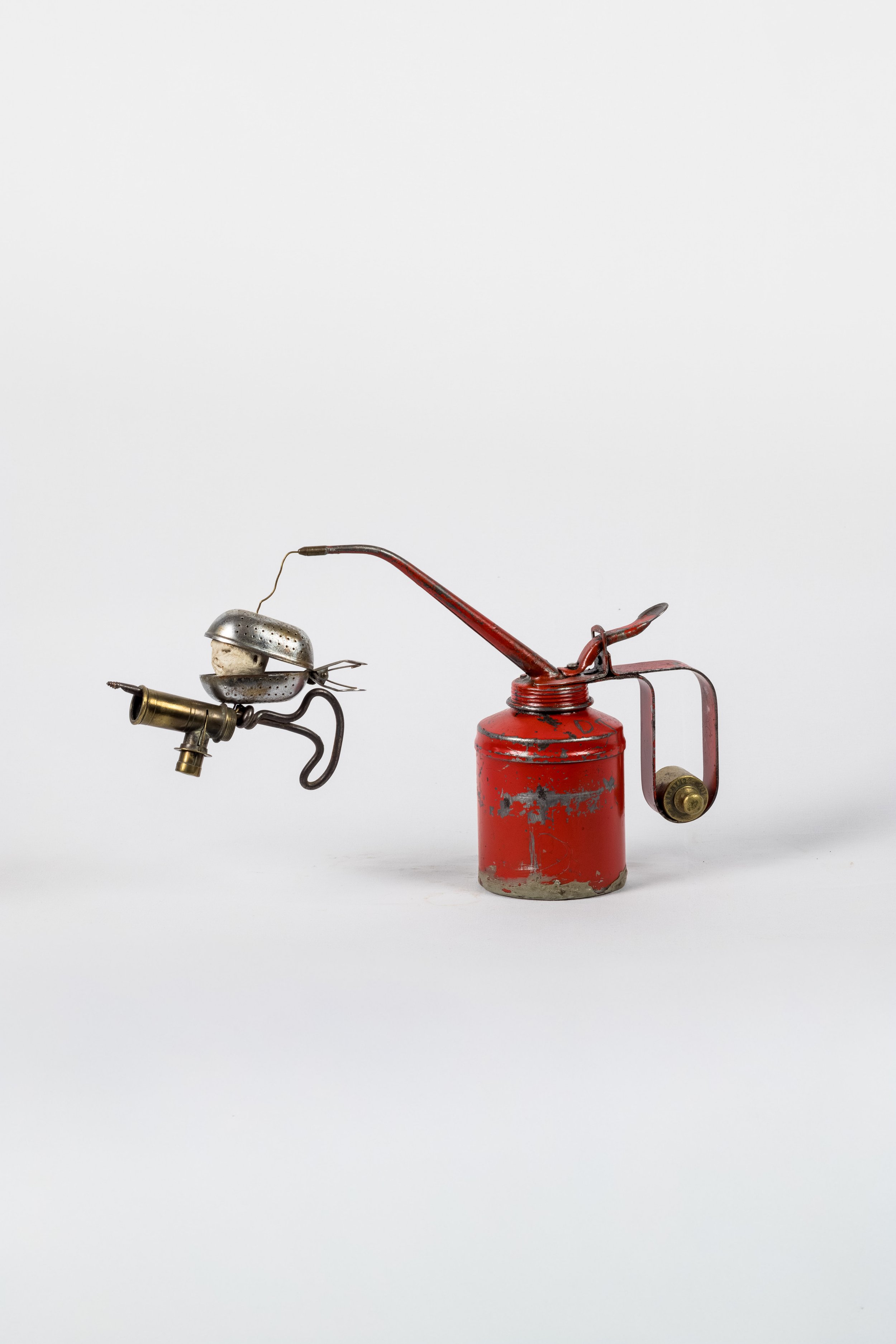
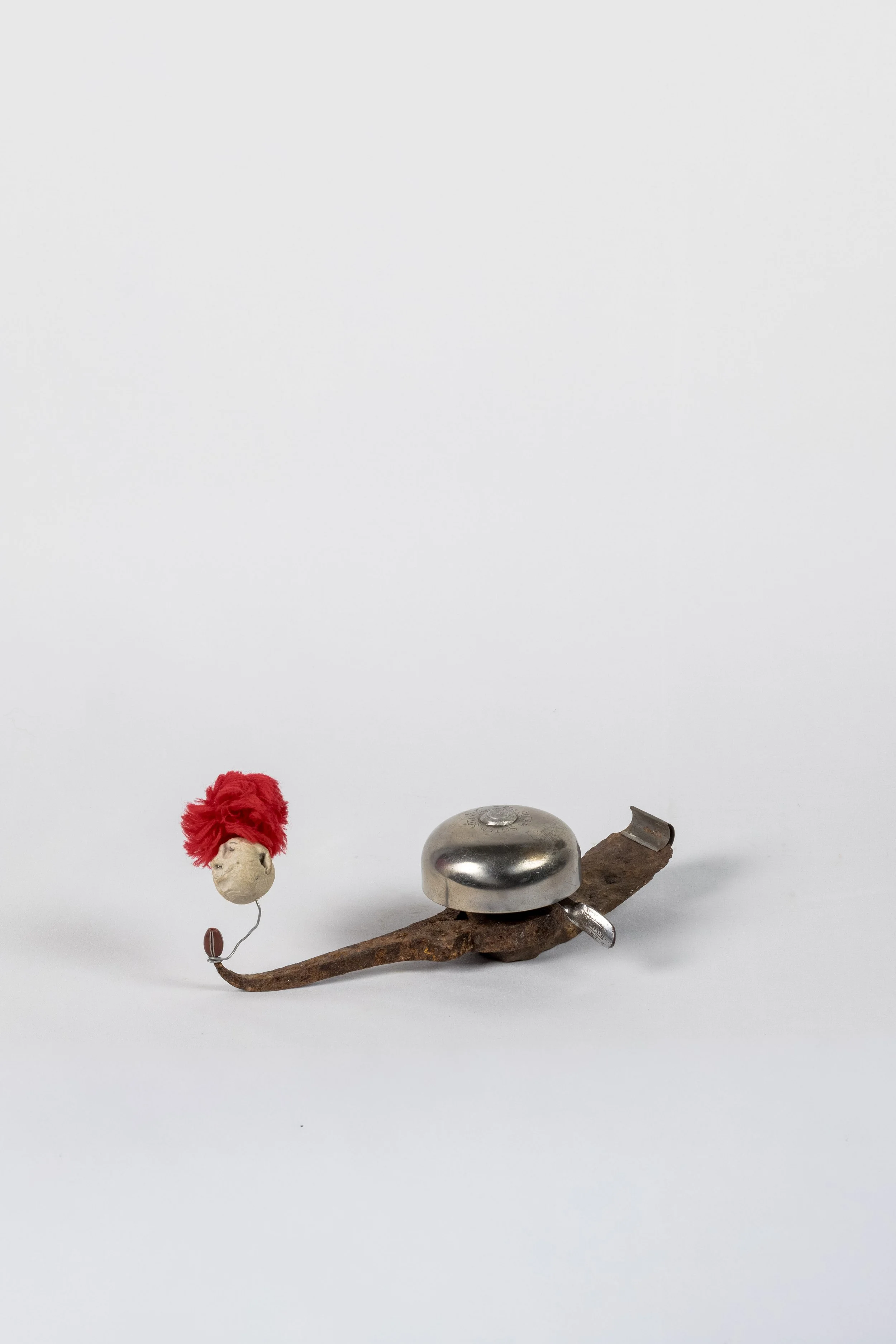
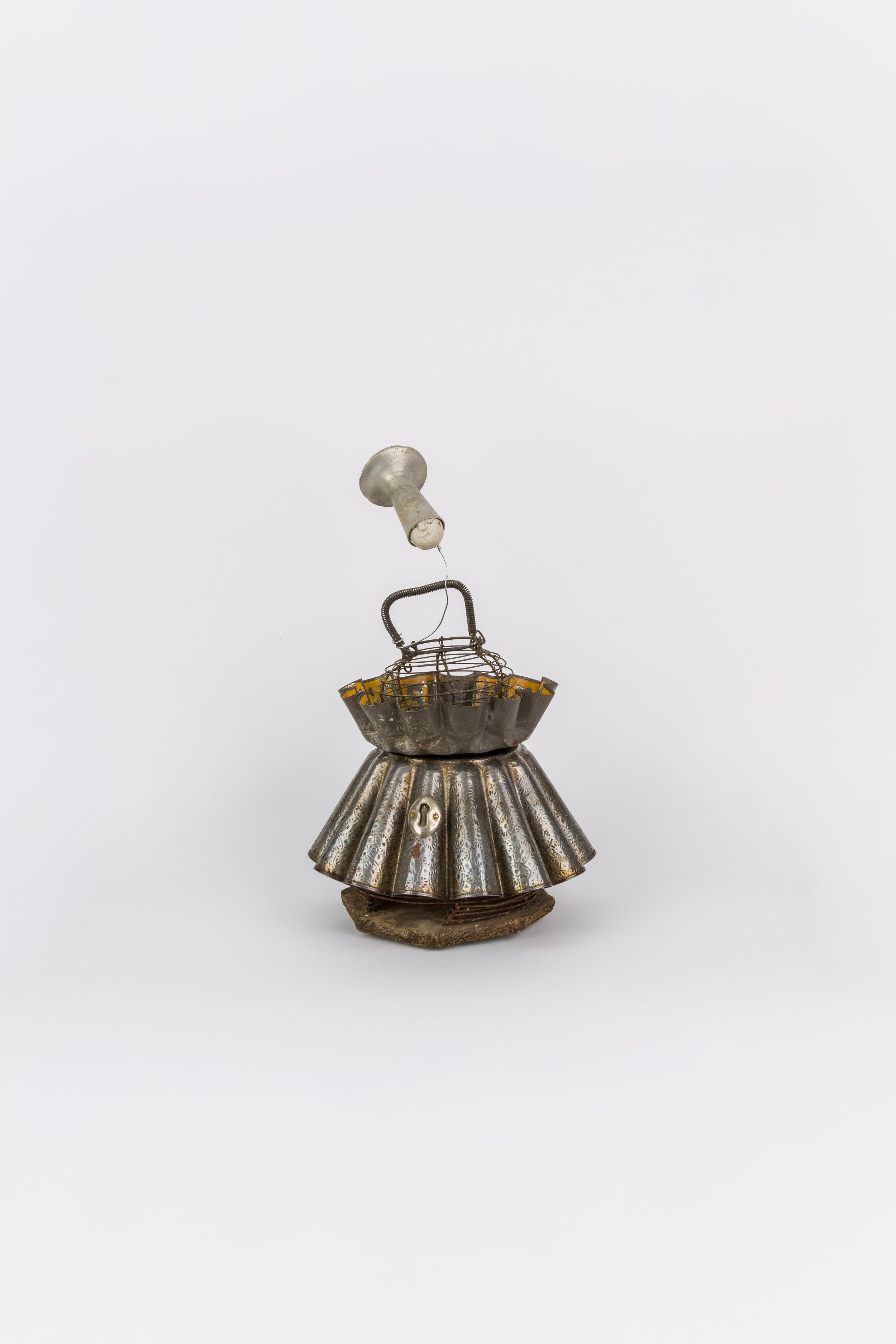
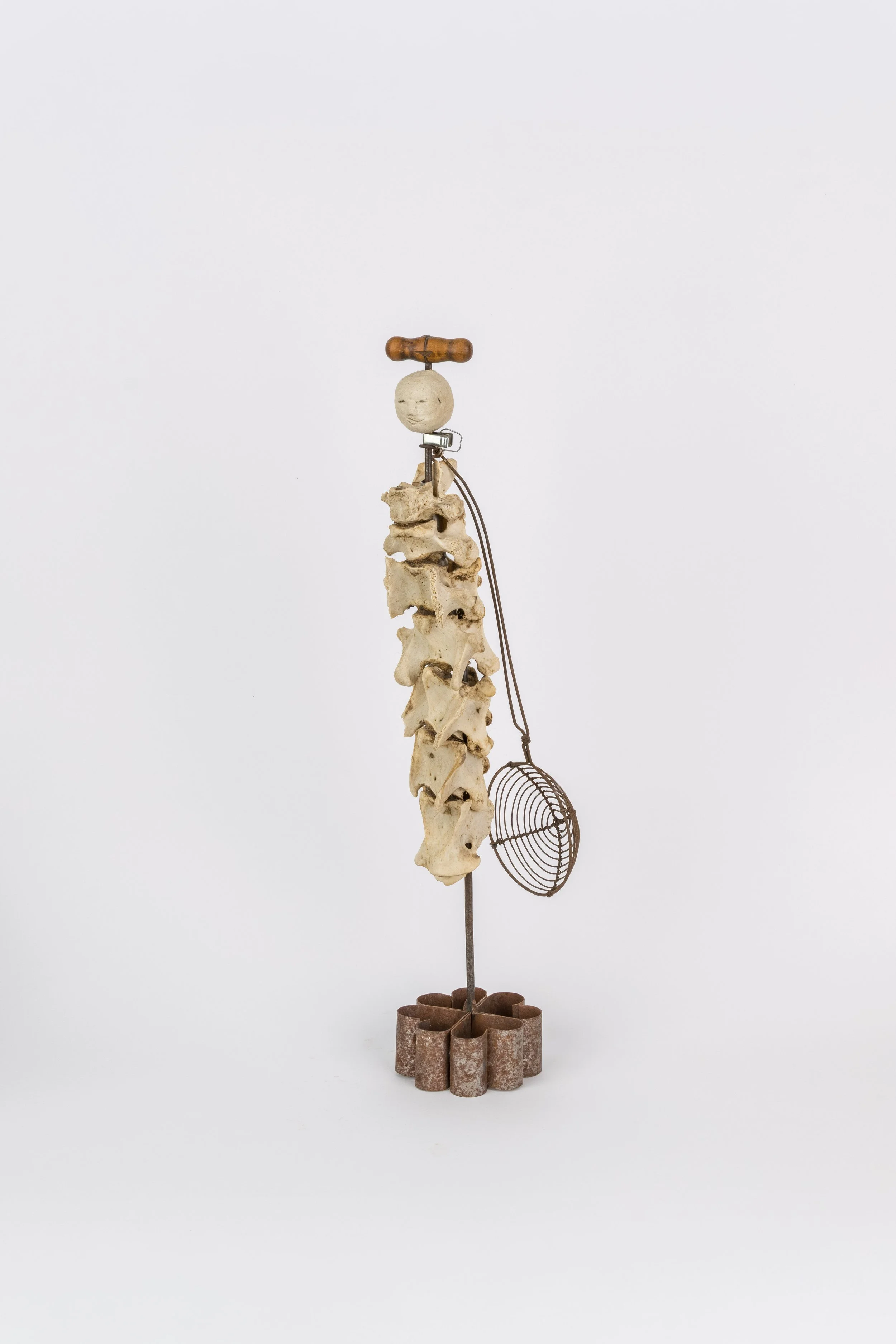
Luísa Serôdio constrói as suas figuras – uma numerosa trupe de comédia entre o grotesco e o jocoso – com as coisas desclassificadas que se amontoam no seu atelier e lhe dão o aspecto de “estaleiro” organizado de materiais mortos que pertenceram outrora a uma esfera da utilidade. São restos, dejectos, resíduos da mais diversa proveniência, predominantemente metálicos, mas também de outros materiais, já que o heteróclito, o arbitrário e o ocasional são a regra. A artista recolhe estes diversos materiais como fazem os sucateiros, para depois os submeter a um trabalho de recuperação que procede através do desvio e agenciamento, isto é, usando-os de uma maneira tão imprevista e tão engenhosa (há uma lado de “maquinação” neste processo como acontece em tudo aquilo a que chamamos “engenhoca”) que provoca um “choque” no espectador, uma experiência que pode ser pensada como o espanto de quem assiste à “transfiguração do banal”, para usarmos uma noção de Arthur Danto, e observa os artefactos fantásticos (isto é, produtos da fantasia) assim criados. Importa lembrar que o sucateiro, também designado como trapeiro, foi incluído por Walter Benjamin numa honrosa constelação de figuras da cidade moderna, da qual também o flâneur faz parte, resgatando-o da imagem de miséria que o envolvia exclusivamente e o tornava uma personagem da sociologia da pobreza. A palavra que Benjamin usa para o nomear é Lumpensammler, associando-o a uma outra figura que lhe suscitou um enorme interesse: o coleccionador. É a esta distinta genealogia que podemos legitimamente associar os “bonecos” de Luísa Serôdio. Eles são pobres e vulgares nos materiais, mas ricos nas evocações e nos modos de significação que têm a capacidade de elaborar.
O poder de transformar objectos e materiais humildes em significantes fortes não é a única duplicidade que os habita. Fazendo de certo modo lembrar a arte povera, eles são, como é fácil reconhecer à primeira vista, o resultado de uma prática da bricolage, à qual associamos geralmente o trabalho oficinal. Mas um olhar mais atento consegue perceber que eles também resultam de uma prática intelectual mais sofisticada, de um diálogo subtil (evocando uma problemática tão antiga como o próprio conceito de arte) entre o artesanato e os códigos da cultura e da artes eruditas. Usando as técnicas da assemblage para a criação de obras tridimensionais onde são investidas, sem moderação, as criaçõess da fantasia como faculdade da imaginação, a artista acena simultaneamente ao dadaísmo, ao cubismo, ao surrealismo, em suma, a experiências artísticas consagradas na história da arte moderna e contemporânea.
Torna-se assim possível, mas não obrigatório, remeter estes artefactos realizados de acordo com uma gramática muito livre do antropomorfismo tanto para uma tradição popular como para uma tradição erudita. Estes “bonecos” têm de facto algum parentesco com figuras da arte popular; mas também é possível ver neles alusões à comédia, povoada por patetas, clowns, saltimbancos, querubins. Eles brincam conscientemente com o patético e o Kitsch, mas não se deixam fixar facilmente numa tipologia.
“Brincar” é um verbo adequado para falar destes objectos. Porque eles, ostentando mais uma duplicidade, podem ser vistos como brinquedos. E ganham então a potencialidade utópica dos jogos de – e para – crianças. No mundo das crianças, tudo o que é velho pode tornar-se brinquedo. Elas têm uma particular propensão para se tornarem sucateiros e criar pequenos mundos no interior do grande mundo. Dotados dos enormes poderes da ilusão (lembremos que “ilusão”, in-ludere, tem a mesma etimologia de “lúdico”), sentem-se irresistivelmente atraídos pelos resíduos e são capazes de reconhecer neles, no universo das coisas, o rosto de novas realidades possíveis, diferentes daquela em que estamos imersos na vida quotidiana. Também aqui se torna pertinente pensar na transformação de objectos de sucata, já fora da esfera do uso, em brinquedos, a partir de uma referência erudita, como aquela que o filósofo Giorgio Agamben, num estudo incluído em Infanzia e storia (Einaudi, 2001), que tem por título “Il paese dei balocchi. Riflessioni sulla storia e sul gioco” (“O país dos brinquedos. Reflexões sobre a história e sobre o jogo”), faz a Claude Levi-Strauss, mais propriamente à noção de bricolage, da qual o antropólogo francês se serve para expor o funcionamento do mito, no primeiro capítulo de La pensée sauvage. Tal como o mito utiliza “peças e pedaços” de outros conjuntos estruturais, de outros mitos, que assim encontram uma nova articulação, também as crianças se apropriam facilmente de materiais muito diversos, de desperdícios, para construírem novos brinquedos e criarem os seus jogos.
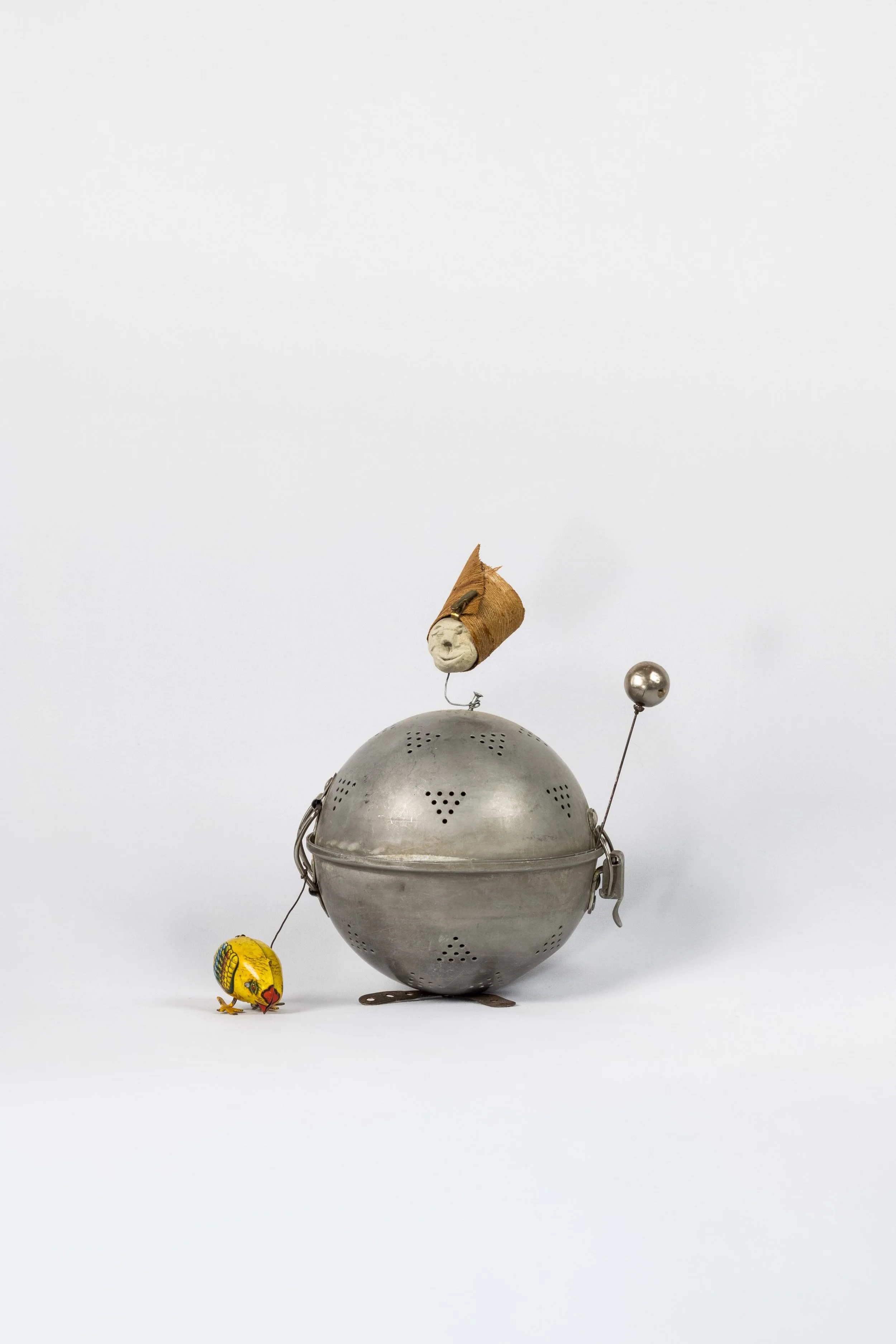
A fantasia, a imaginação, a ilusão, o jogo, o brinquedo: são estes os componentes essenciais dos objectos lúdicos de Luísa Serôdio. À imagem do jogo infantil, a artista desvia os objectos da vida útil e da racionalidade a que estão ligados, apesar de terem passado à condição de sucata, para construir um mundo em que a experiência não está separada da imaginação. Trata-se de um mundo miniaturizado, de uma abreviação do mundo real, muitas vezes jocosa e sempre fantástica, isto é, produto da fantasia. Podemos ver este jogo como a mais inocente das actividades, mas também como um modo ostensivo, quase escandaloso (mas que não precisa de se pensar a si próprio enquanto tal), de mostrar que há uma relação consubstancial entre o jogo infantil e o fazer artístico, entre o brinquedo e a obra de arte, entre brincar e “artizar”, para utilizar um neologismo que na sua declinação negativa – a “desartização” da arte – é um conceito fundamental da teoria estética de Adorno. A arte é sempre um regresso à infância, escreveu Pavese no seu diário, O Ofício de Viver, sem no entanto precisar de recorrer à estética freudiana. Louise Bourgeois formula a questão desta maneira: “O artista não conhece os ritos de passagem. Continua a ser uma criança que não é inocente e no entanto é impossível, para ele, escapar ou desfazer-se dos seus laços. Não é capaz de se libertar do inconsciente”.
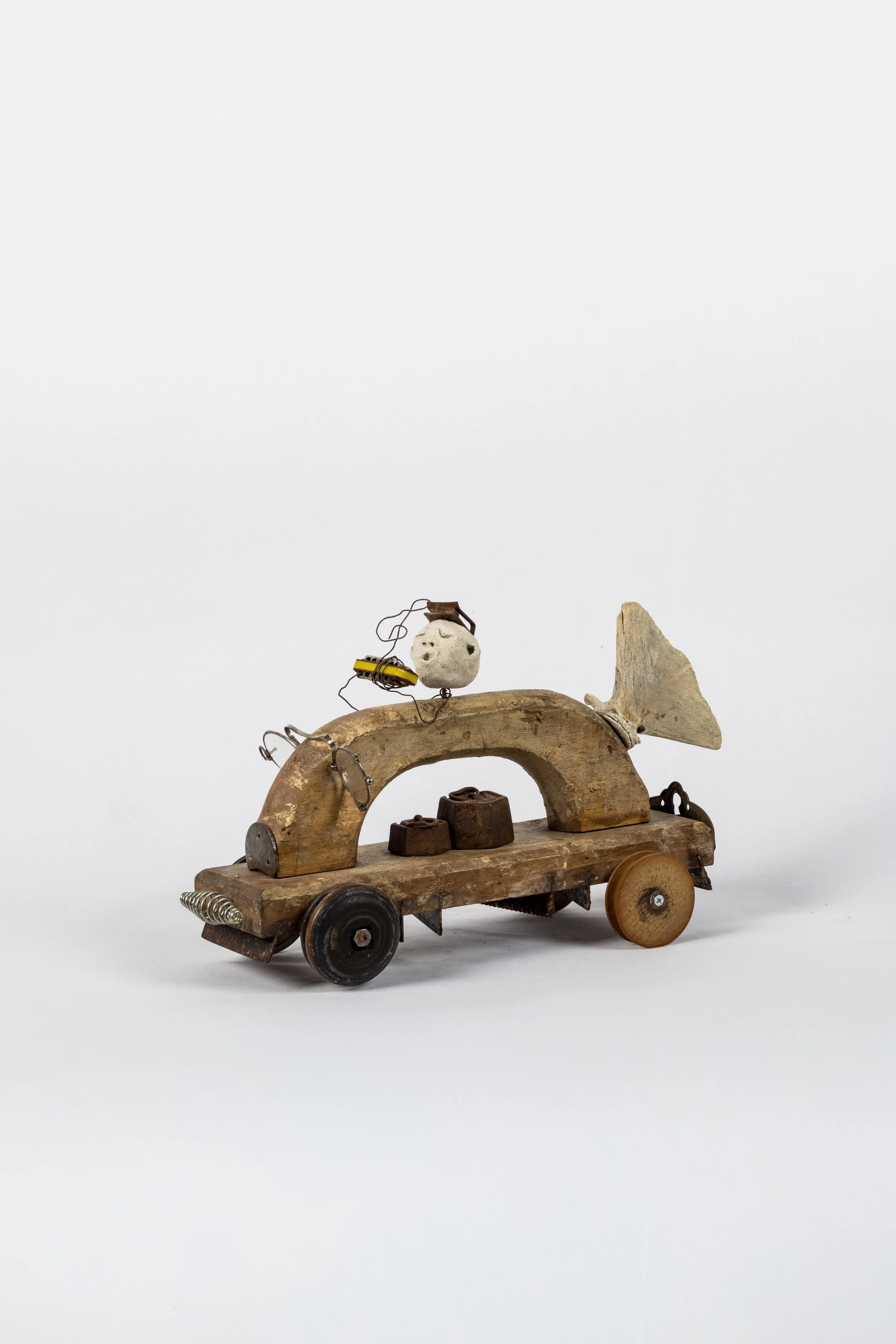
A hipótese formulada por Louise Bourgeois, a da sobredeterminação do inconsciente, é bastante atractiva e revelar-se-ia certamente cheia de potencialidades para uma elaboração interpretativa dos “brinquedos” de Luísa Serôdio que não permite no entanto ver nos seus artefactos lúdicos uma “destruição do pai”. Mas também não devemos ficar pela simples hipótese do mais inocente jogo infantil, até porque a trupe não é apenas constituída por personagens de uma muito particular commedia dell’arte, do teatro de feira, do circo ou do music-hall; por vezes, embora todas estas personagens tenham um rosto humano, e algumas sejam tão pícaras como o Pinóquio, parece que estamos a assistir a uma parada de monstros que, na nossa ausência, podem ganhar vida e entregar-se a danças macabras.
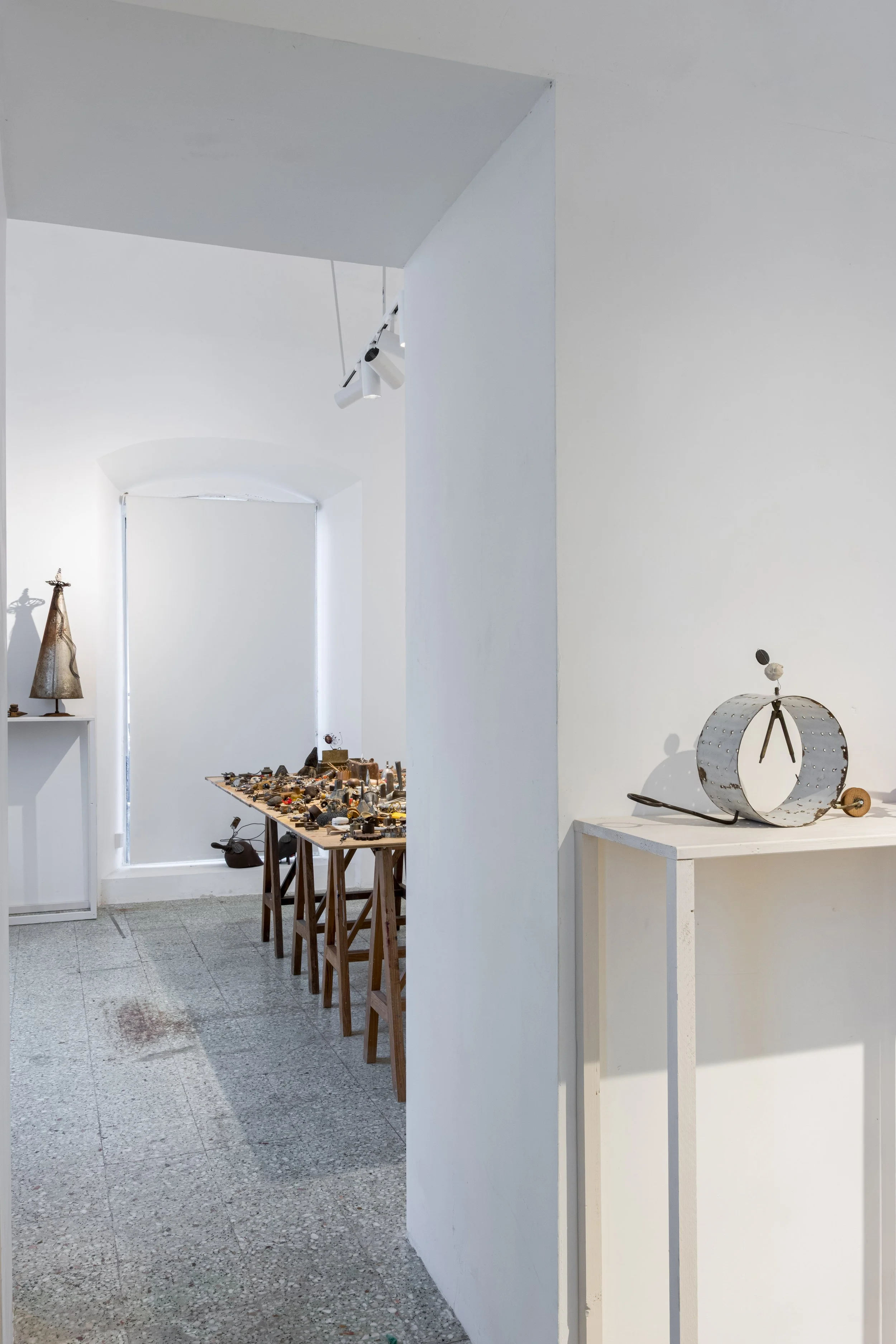
Mas o que o espectador apreende em primeiro lugar nestes bonecos é a sua condição construtiva, o jogo de construção como actividade lúdica orientada por imagens de fantasia. Esta condição liga-os à arquitectura, à escultura e ao design. E aqui temos mais uma duplicidade, ou melhor, uma hesitação que não precisa de ser resolvida entre as artes plásticas e as artes aplicadas. A trupe tanto pode ser uma história de fantasmas para adultos como uma utópica república infantil.
An Irresistible Ludic Impulse
Luísa Serôdio builds her figures – a numerous comedy troupe in between the grotesque and the humorous – with the discarded things that pile up in her studio, giving it the appearance of an organized “workshop” of dead materials that once served a practical purpose. These are scraps, waste and debris from many origins, mostly metallic, but also made of other materials, since the rule, here, is the eclectic, the random and the incidental. The artist gathers these various materials much as scrap dealers do, and then subjects them to a process of recovery that operates through diversion and assemblage, that is, by using them in such unexpected and ingenious ways (there is an element of “machination” in this process, as with everything we call a ‘contraption’ ) that it produces a “shock” in the viewer. This experience may be understood as the astonishment of someone witnessing the “transfiguration of the commonplace”, to borrow a notion from Arthur Danto, as one observes the fantastic artefacts (that is, products of the imagination) thus created. It is worth remembering that the scrap dealer, also known as the ragpicker, was included by Walter Benjamin in an illustrious constellation of figures from the modern city – which also includes the flâneur – thereby rescuing him from the image of destitution that had come to define him and had reduced its figure in the sociology of poverty. The term Benjamin uses to describe him is Lumpensammler, associating him to another figure who triggered his keen interest: the collector. It is to this distinct lineage that we can legitimately associate Luísa Serôdio’s “toys”. Their materials are humble and ordinary, but rich in the imagery and meanings they are capable of generating.
The power to transform humble objects and materials into strong symbols is not the only duality inhabitating them. Reminiscent in some sense of arte povera, they are, as is immediately apparent, the result of a bricolage-style approach, which we generally associate with the workshop-based craft. And yet, a closer look reveals that they also stem from a more sophisticated intellectual practice, from a subtle dialogue (evoking a problem as old as the very concept of art itself) between craftsmanship and the codes of high culture and fine art. Employing the techniques of assemblage to create three-dimensional works in which the creations of fantasy – as a faculty of the imagination – are invessted without restraint, the artist simultaneously draws on Dadaism, Cubism, and Surrealism; in short, on artistic movements that became the canon in the history of modern and contemporary art.
It thus becomes possible, though not mandatory, to attribute these artifacts created according to a grammar very distant from any anthropomorphism, to both folk and learned traditions. These “toys” do indeed bear affinities with figures from folk art; but they evoke comedy, populated by fools, clowns, acrobats, cherubs. They knowingly play with the pathetic and with kitsch, yet they don’t lend themselves easily to a single classification.
“To play” is an appropriate verb for describing these objects. For, displaying yet another duality, they may be seen as toys. And they thus take on the utopian potential of games played by – and for – children. In the world of children, anything old can become a toy. Children have a particular propensity to become ragpickers, creating small worlds within the larger world. Equipped with the immense powers of illusion (let us recall that “illusion,” from the Latin in-ludere, shares the same etymology as “ludic”), they are irresistibly drawn to waste and are able to recognize within it – in the universe of things – the face of new possible realities, different from the reality in which we are immersed in our daily lives. Here, again, it is worth considering the transformation of scrap objects – no longer in use – into toys, drawing on a scholarly reference such as the one the philosopher Giorgio Agamben – in a study included in Infanzia e storia (Einaudi, 2001), titled “Il paese dei balocchi. Riflessioni sulla storia e sul gioco” (“The Land of Toys. Reflections on History and Play”) – makes to Claude Lévi-Strauss, more specifically to the notion of bricolage, which the French anthropologist uses to explain the workings of myth in the first chapter of La pensée sauvage. Just as myths draw on ‘bits and pieces’ from other structural frameworks – from other myths – which are then given a new articulation, so too do children easily appropriate a wide range of materials, scraps, to build new toys and come up with their own games.
Fantasy, imagination, illusion, play, toys: these are the essential components of Luísa Serôdio’s ludic objects. Just like in a child’s game, the artist diverts objects from their utilitarian life and the rationality associated with them – even after they have become scrap – in order to build a world in which experience is inseparable from imagination. This is a miniaturised world, a compressed version of the real world, often humorous and always fantastical, that is, a product of the imagination. We can view this play as the most innocent of activities, but also as a blatant, almost scandalous way (though one that need not see itself as such), of demonstrating that there is a consubstantial relationship between children’s play and artistic creation, between the toy and the work of art, between playing and ‘artification’, to use a neologism which, in its negative form – the ‘de-artification’ of art – is a fundamental concept in Adorno’s aesthetic theory. Art is always a return to childhood, wrote Pavese in his diary, The Business of Living, even if he didn’t need to resort to Freudian aesthetics.
Louise Bourgeois puts it this way: “The artist is unfamiliar with rites of passage. He remains a child who is not innocent, and yet it is impossible for him to untie or break free from his bonds. He is unable to free himself from the unconscious. The hypothesis proposed by Louise Bourgeois – that of the overdetermination of the unconscious – is quite compelling and would certainly prove to be full of possibilities in an interpretative analysis of Luísa Serôdio’s “toys”, one that would not see in her ludic artifacts a “destruction of the father”. But neither should we stop at the simple hypothesis of the most innocent of children’s games, not least because the troupe is not merely made up of characters from a very particular form of commedia dell’arte, fairground attraction, circus or music hall; at times, although all these characters have human faces, and some are as mischievous as Pinocchio, it feels as though we are watching a parade of monsters which, in our absence, may come to life and indulge in macabre dances.
Yet what the viewer first notices about these puppets is their constructive nature – the game of building as a playful activity guided by images of fantasy. This status links them to architecture, sculpture and design. And here we find yet another duplicity, or rather, a tension that need not be resolved between the fine arts and the applied arts. The troupe could just as easily be a ghost story for adults or a utopian children’s republic.