
5 Nov — 7 Dec 2022 | ÉVORA
Doméstico
Estúdio Emigrante
I have known the work of Estúdio Imigrante almost since the beginning. I remember very clearly the first films I watched. I remember getting the impression that something new was under construction. It is essential for classifying the studio work, the understanding that we are in the presence of an object with a new identity. The interdisciplinary intersection is the fundamental basis of their artistic practice, building an extension of architecture to cinema and visual arts. Gustavo Imigrante, founder and director of the studio, believes that experimentation, and mixing of knowledge, processes, and techniques, enhances the possibility of “an encounter with the new”. This novelty works as a motto for reflection and construction of a new level of experimentation, be it in cinema, architecture, photography, or above all, in artistic thought in general.
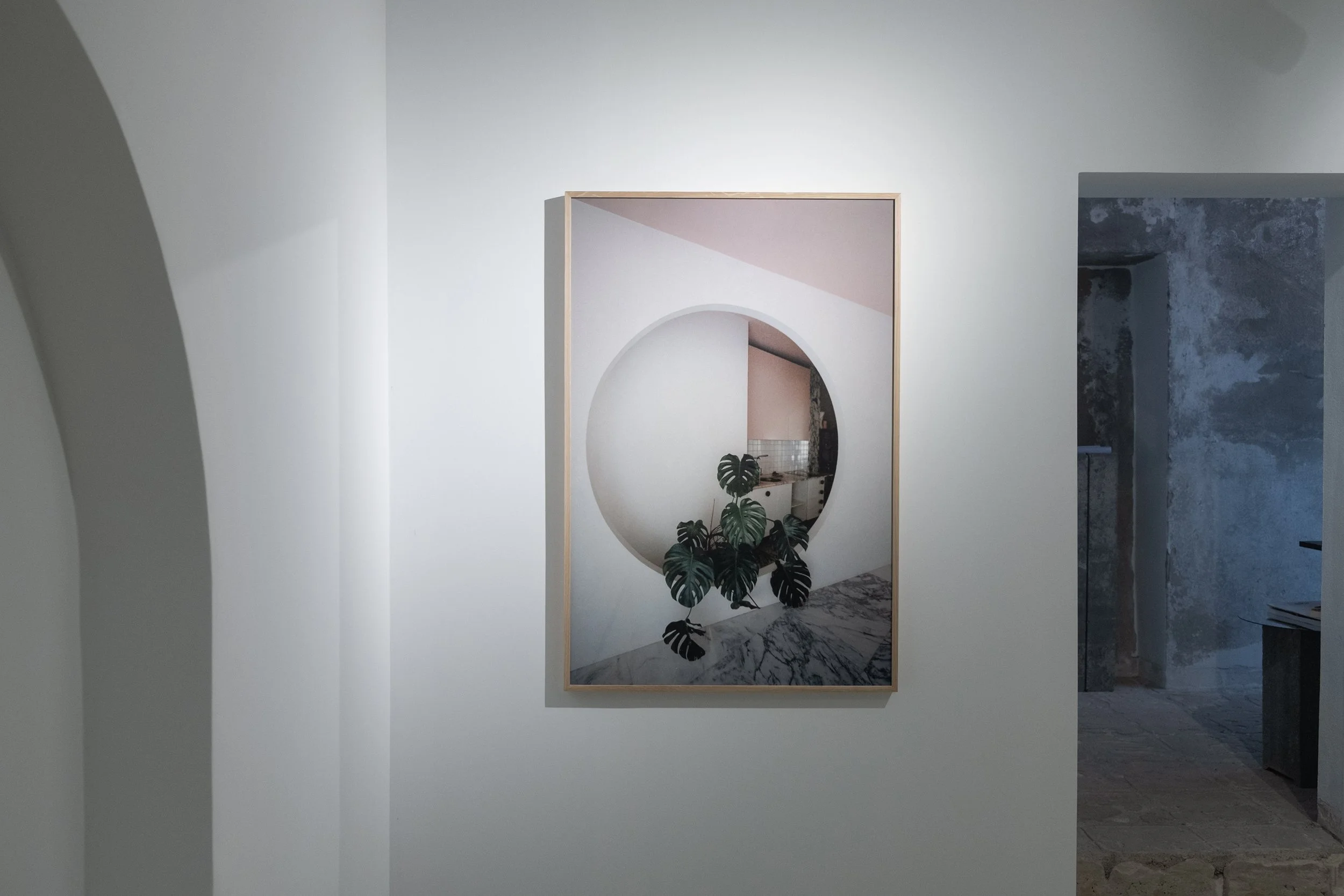
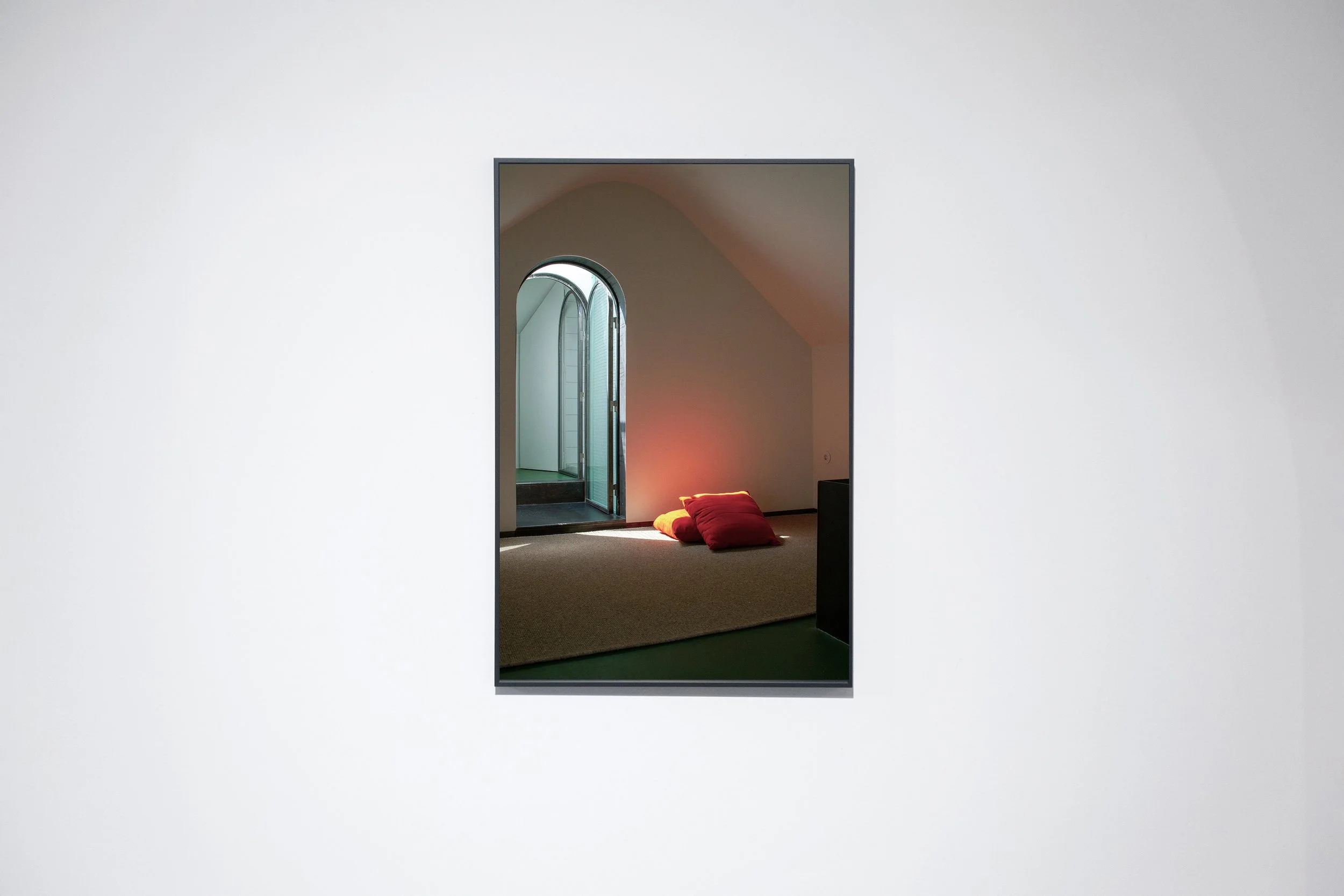
The exhibition took its title from the project developed in the last two years by the studio. Doméstico is a visual essay developed as a script for a film, where the artist-director, through video, photography, and other cinematographic resources, works on three different works by three Portuguese architecture studios. For Plato, Estúdio Imigrante conceived the exhibition space as a stage/laboratory for experimenting with its images, in the way in which the installation of photographs and video interact with each other and enhance the reading and interpretation of the project narratives. Doméstico works as a triptych, which casts different perspectives on three single-family houses. Here, architecture and performance live in constant tension.
In the first moment, a film entitled “Sometimes my head gets ahead of me” is shown along with a mosaic of 20 photographs depicting scenes from the film. We are witnessing a performative game of everyday life, routine, and tasks, the self-indulgent morning protocol of everyday life. In the photographic mosaic, the space of human presence is undressed, and twenty fragments of the house after its use. (The GreenHouse by Ottotto Architecture)
In “To build a postmodern sacrifice”, a couple informs their teenage daughter that she is no longer needed by the family. In conversation with her father, the young woman is encouraged to look for new options for the future. Two images from this moment portray the architectural project. It is questioned how much the values and family dynamics are transformed by the economic matrices and the productivity patterns of society. (090 by Fala Atelier)
The last moment, which closes the triptych, is “We were this close”, a film and two object-images. In these pieces, contemporary life in a modern house is staged, a type of architecture that tends to propose a space of conviviality and familiarity for its inhabitants, though it is invariably conditioned by the use of gadgets and devices that are part of the day-to-day. (House Santo Tirso by Nuno Brandão Costa)
Domestic reconfigures the architecture of the house, understanding it as a stage, a space for experimentation and reflection of everyday life. Its own domestic and performative character is subject to analysis. The concepts of routine, productivity, alienation, and identity constitute a very poignant metaphor for the present.
Conheço o trabalho do Estúdio Imigrante praticamente desde o seu início. Lembro-me com clareza dos primeiros filmes que vi. Recordo-me da sensação de que algo de novo estava a ser construído. Para compreender o trabalho do estúdio, é essencial reconhecer que estamos perante um objeto com uma identidade própria. A intersecção interdisciplinar constitui a base fundamental da sua prática artística, construindo um prolongamento da arquitetura para o cinema e para as artes visuais. Gustavo Imigrante, fundador e diretor do estúdio, acredita que a experimentação e a combinação de saberes, processos e técnicas potenciam a possibilidade de «um encontro com o novo». Esta novidade funciona como um mote para a reflexão e para a construção de um novo patamar de experimentação, seja no cinema, na arquitetura, na fotografia ou, acima de tudo, no pensamento artístico em geral.
A exposição foi buscar o seu título ao projeto desenvolvido pelo estúdio nos últimos dois anos. Doméstico é um ensaio visual concebido como argumento para um filme, no qual o artista-realizador, através do vídeo, da fotografia e de outros recursos cinematográficos, trabalha sobre três obras de três ateliers portugueses de arquitetura. Para a Plato, o Estúdio Imigrante concebeu o espaço expositivo como um palco/laboratório para a experimentação das suas imagens, explorando a forma como a instalação de fotografias e vídeo interagem entre si e potenciam a leitura e a interpretação das narrativas dos projetos. Doméstico apresenta-se como um tríptico que projeta diferentes perspetivas sobre três habitações unifamiliares. Aqui, arquitetura e performance coexistem numa tensão constante.
No primeiro momento, é apresentado o filme Sometimes My Head Gets Ahead of Me, acompanhado por um mosaico de vinte fotografias que retratam cenas do filme. Assistimos a um jogo performativo do quotidiano, da rotina e das tarefas, ao protocolo matinal autocentrado da vida diária. No mosaico fotográfico, o espaço da presença humana é despido, revelando vinte fragmentos da casa após a sua utilização. (The GreenHouse, de Ottotto Architecture)
Em To Build a Postmodern Sacrifice, um casal informa a filha adolescente de que esta já não é necessária à família. Numa conversa com o pai, a jovem é incentivada a procurar novas possibilidades para o seu futuro. Duas imagens deste momento retratam o projeto de arquitetura. Questiona-se até que ponto os valores e as dinâmicas familiares são transformados pelas matrizes económicas e pelos padrões de produtividade da sociedade. (090, de Fala Atelier)
O último momento, que encerra o tríptico, é We Were This Close, composto por um filme e duas imagens-objeto. Nestas peças, encena-se a vida contemporânea numa casa moderna, um tipo de arquitetura que tende a propor um espaço de convivência e familiaridade para os seus habitantes, embora inevitavelmente condicionado pelo uso dos dispositivos e tecnologias que fazem parte do quotidiano. (House Santo Tirso, de Nuno Brandão Costa)
Doméstico reconfigura a arquitetura da casa, entendendo-a como um palco, um espaço de experimentação e reflexão sobre a vida quotidiana. O seu próprio carácter doméstico e performativo é colocado em análise. Os conceitos de rotina, produtividade, alienação e identidade constituem uma metáfora particularmente incisiva do presente.

Doméstico | Estúdio Emigrante

Doméstico | Estúdio Emigrante

Doméstico | Estúdio Emigrante

Doméstico | Estúdio Emigrante

Doméstico | Estúdio Emigrante

Doméstico | Estúdio Emigrante

Doméstico | Estúdio Emigrante

Doméstico | Estúdio Emigrante
Doméstico | Estúdio Emigrante

Doméstico | Estúdio Emigrante

Doméstico | Estúdio Emigrante

Doméstico | Estúdio Emigrante

Doméstico | Estúdio Emigrante

Doméstico | Estúdio Emigrante

Doméstico | Estúdio Emigrante

Doméstico | Estúdio Emigrante
Doméstico | Estúdio Emigrante

Doméstico | Estúdio Emigrante

Doméstico | Estúdio Emigrante

Doméstico | Estúdio Emigrante

Doméstico | Estúdio Emigrante.